Celebrating seven decades of Evening Credit
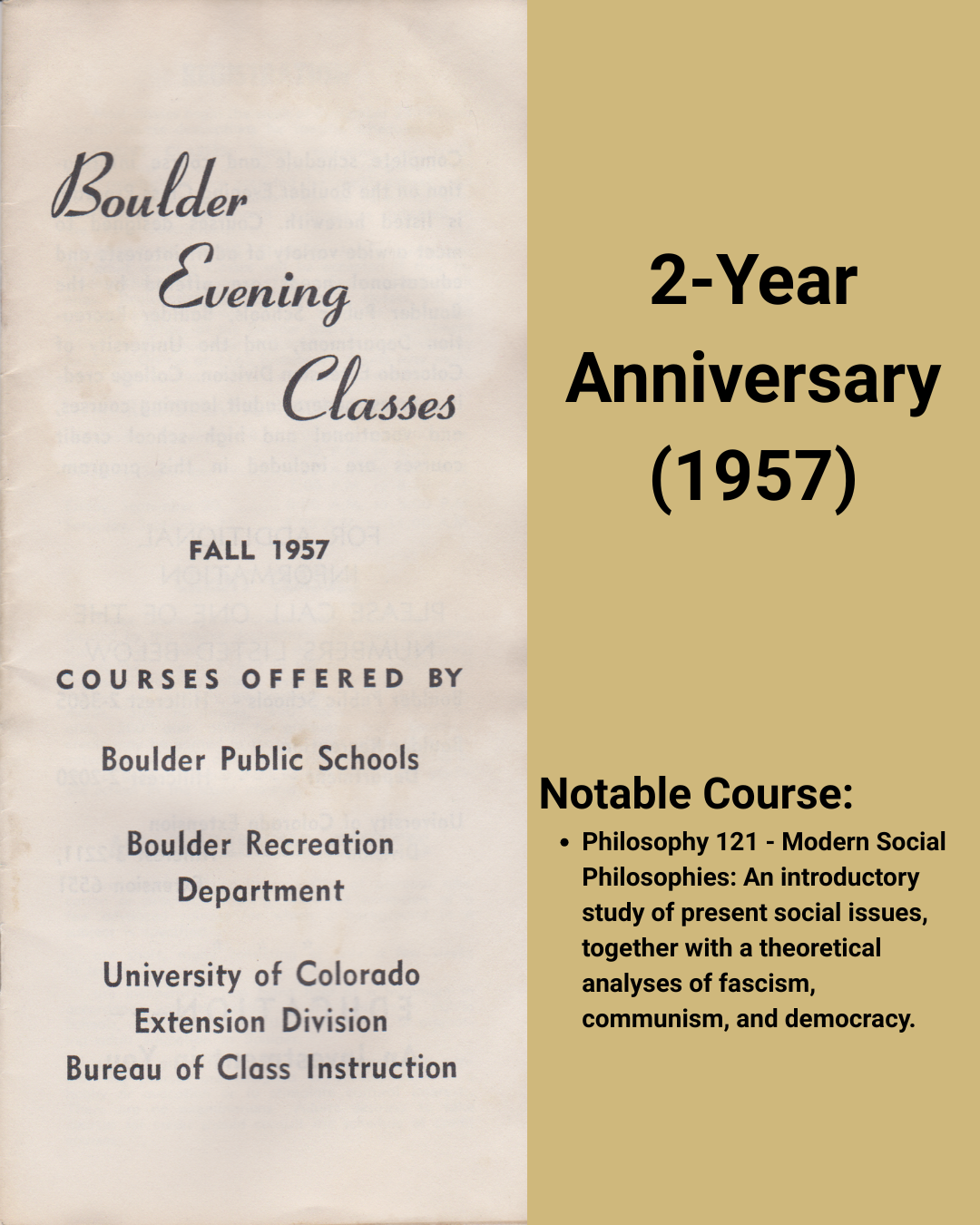
In the fall of 1955, the University Extension Division, the former name for Continuing Education, introduced a groundbreaking program that expanded access to university courses and extended the reach of the university.
Evening Credit, or what is today known as CE Evening Credit, was partially a response to the “rising tide” of student enrollment, as the number of college-age students in Colorado was expected to double moving into the 1960s.
With the available resources of the university already taxed, CU President Ward Darley nevertheless emphasized the need for CU Boulder to continue meeting the growing demand for quality education.
The Extension Division answered the call under its dean’s leadership. Recognizing that many students were taking extension courses via correspondence while balancing full-time jobs, raising families or managing other financial obligations that made daytime attendance on the Boulder campus difficult, the Extension Division bridged the gap with courses offered in the evening. Through these courses, students could earn the same academic credit as their daytime counterparts and balance their other obligations during the day.
Courses were held up to three times a week in the early evening, and included a variety of arts and sciences, business and education courses.
In addition to courses for university credit, general adult learning courses, vocational and high school credit courses were offered through a partnership between Boulder Public Schools and the Boulder Recreation Department, with the goal of promoting adult education in Boulder. These courses were open to all adults regardless of previous education, providing opportunities for the Boulder community to develop skills and explore their interests. Offerings ranged from beginning algebra and plane geometry to welding and ceramics.
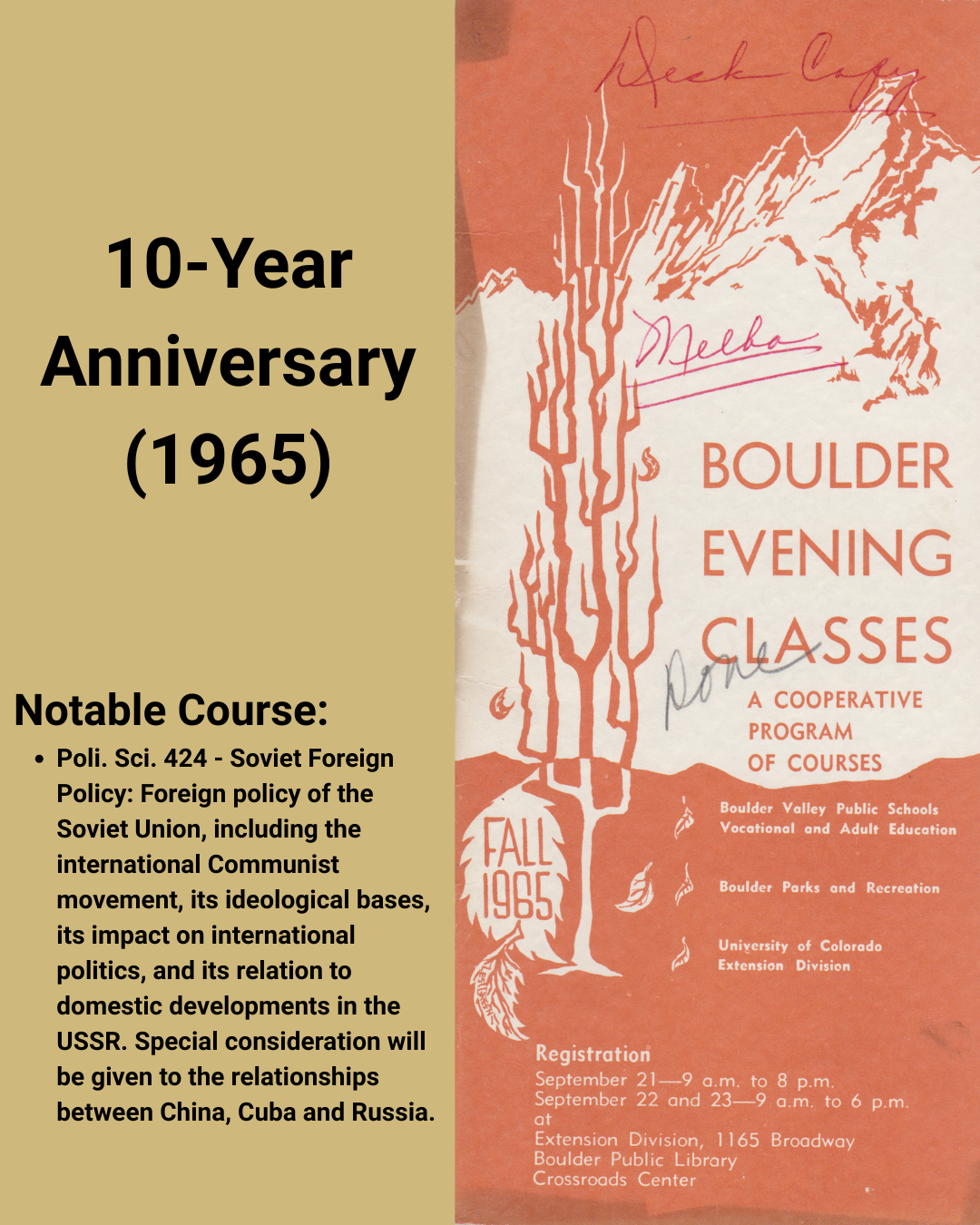
By its 10th anniversary in 1965, Evening Credit had expanded its reach by partnering with the Boulder Public Library to allow students to register for courses in person at the library, recognizing the need to meet the community where it was.
By leveraging the resources and expertise of the Extension Division, each public partner was able to put its educational facilities to the most efficient use and reach more students than ever before.
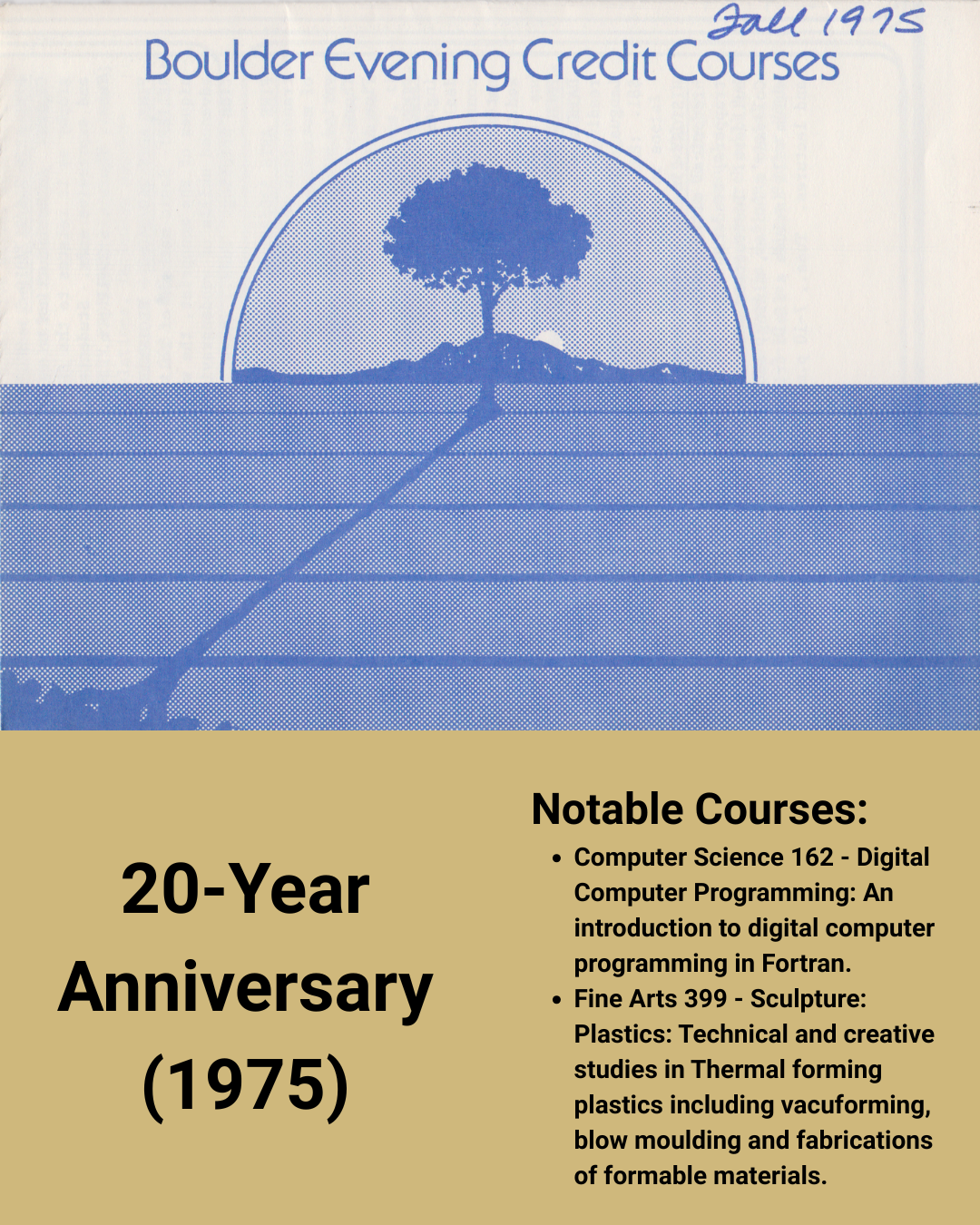
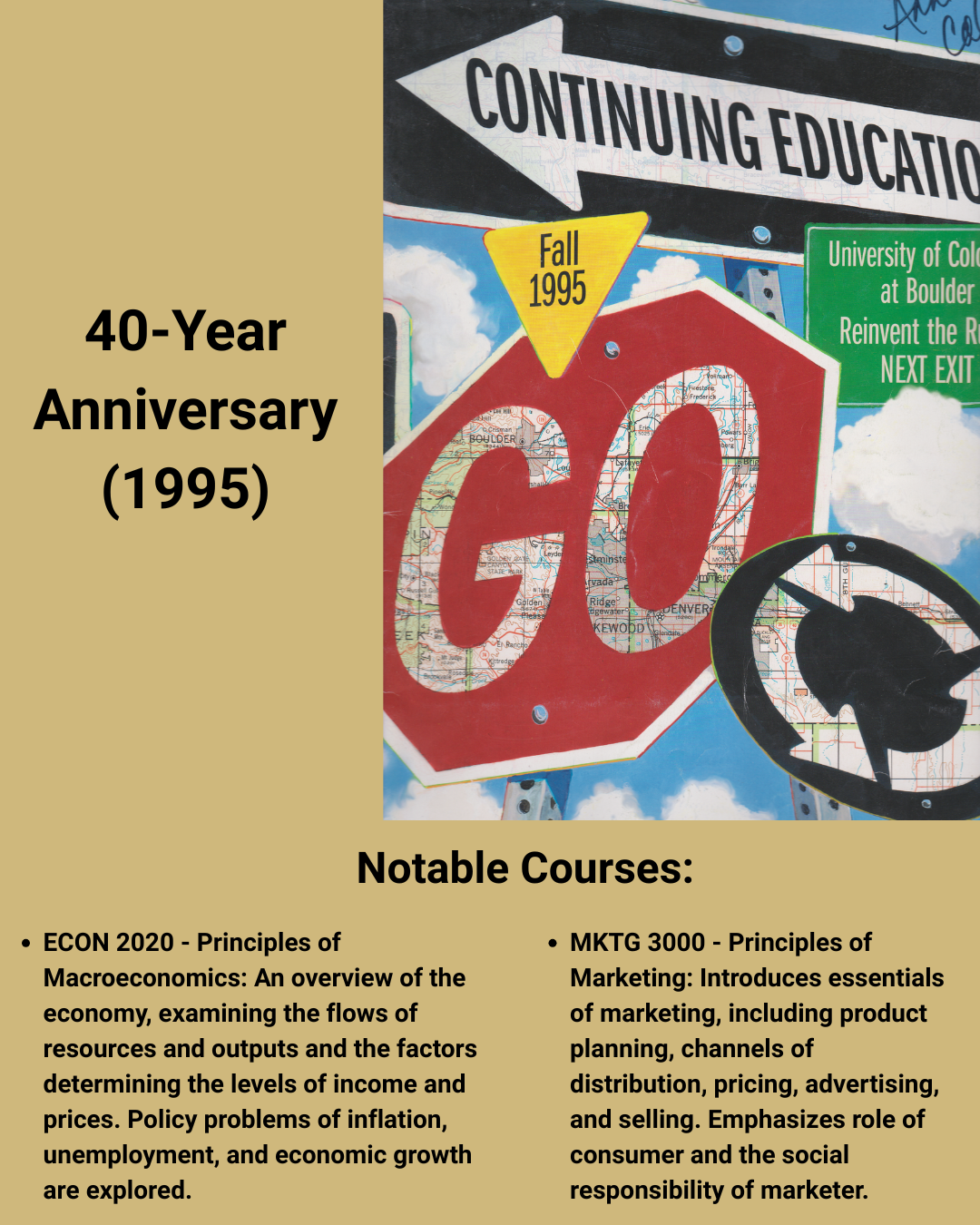
However, by fall 1975, 20 years after the program’s inception, several changes had occurred. In addition to falling under the newly renamed Division of Continuing Education, Evening Credit was now exclusively focused on offering courses for university credit.
While Continuing Education was no longer collaborating with its various public partners for Evening Credit, similar course offerings and formats made their way into the Continuing Education catalog, including high school courses for credit and auditing courses for no credit.
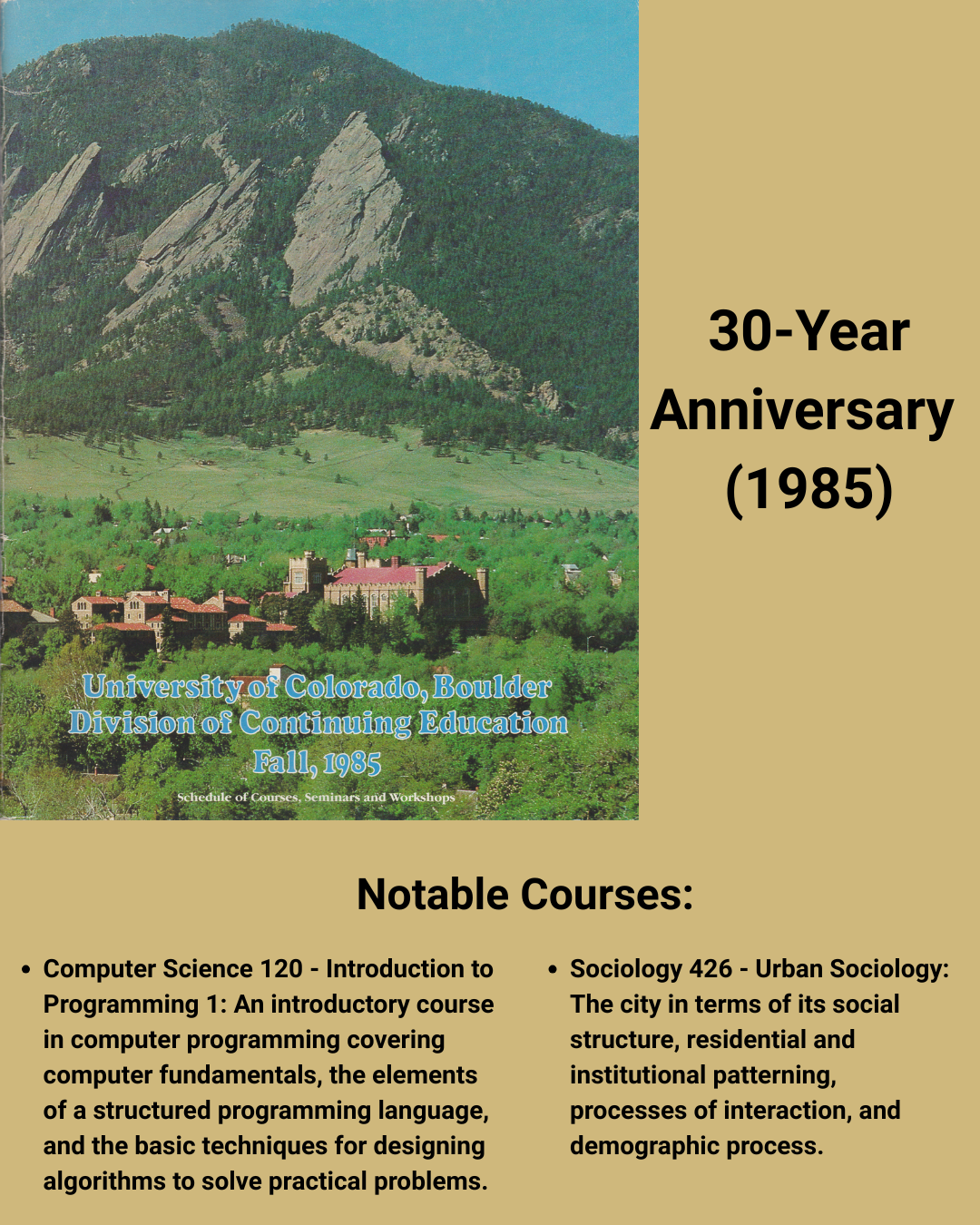
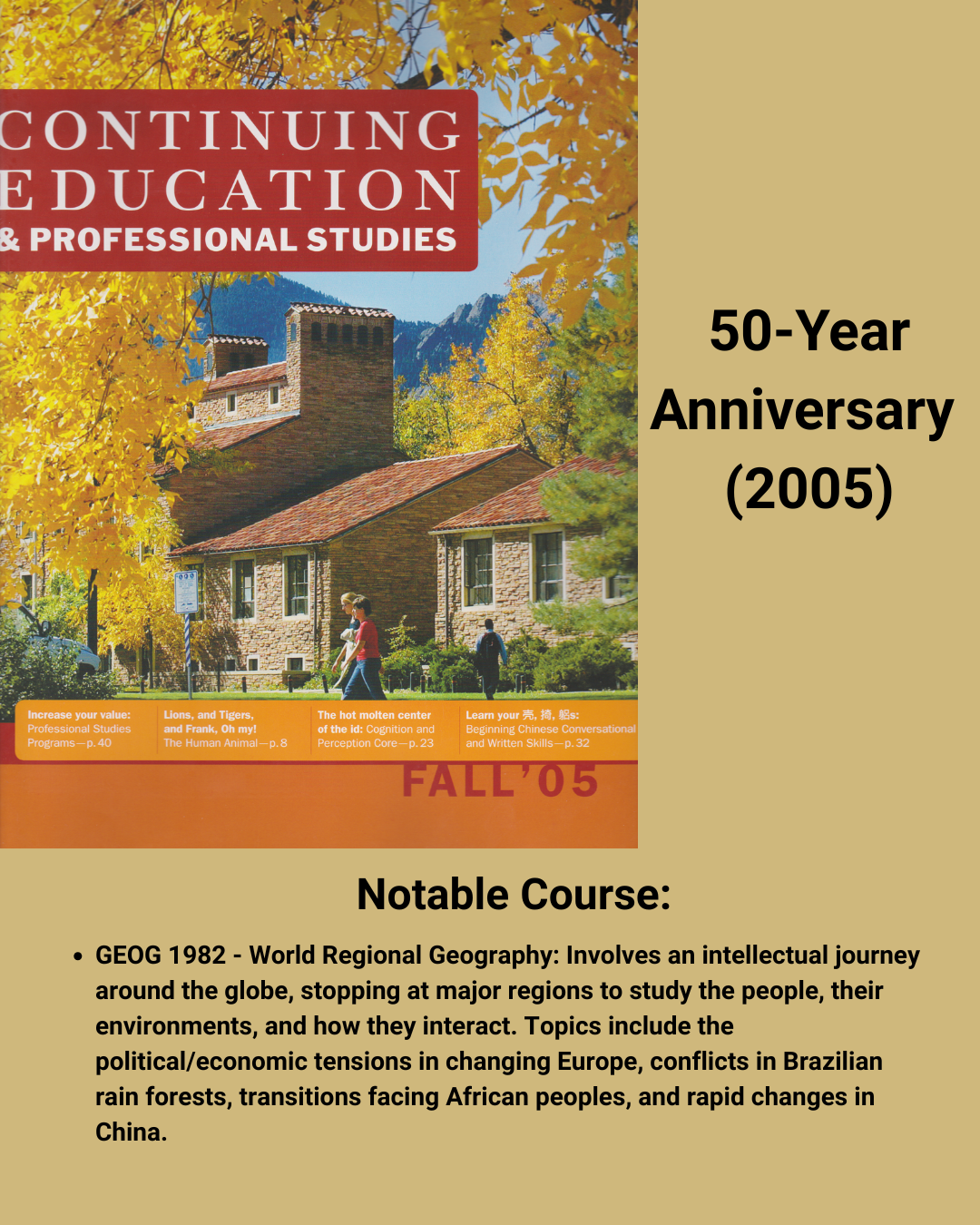
Despite changing its offerings and partnerships, over the next 40 years, Evening Credit continued to give students balancing work, family and other obligations the chance to earn credit. The course catalog also expanded significantly—peaking at around 80 courses per semester in the 1990s—and would eventually include offerings from every major school and college on campus.
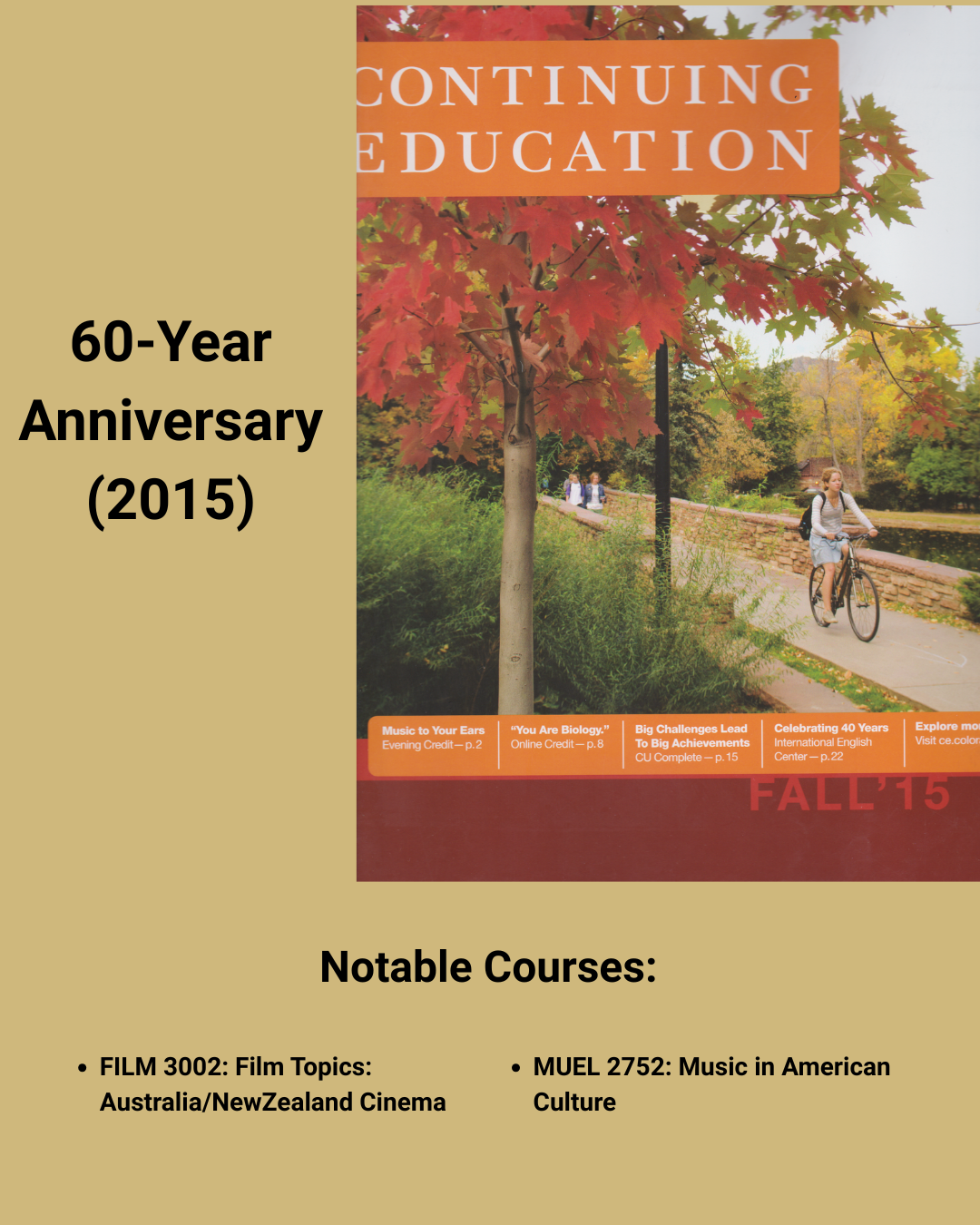
Today, CE Evening Credit still allows students to make significant progress toward their degrees, explore returning to college or supplement their main campus course load.
Though the mission has stayed largely the same across the decades, current program manager Jake Camp believes there are exciting things on the horizon for the 70-year-old program.
"CE Evening Credit uniquely emphasizes blended learning. Most of our classes are offered in hybrid formats, while a smaller number are offered fully in-person,” said Camp. “I see CE Evening Credit leaning even further into hybrid learning—becoming less defined by when classes take place and more by the modalities through which they are delivered. Since the COVID-19 pandemic, the CE Evening Credit program has evolved how and when courses are delivered to continue meeting the needs of our students using the most convenient and effective educational technologies available. I see that work continuing, possibly under a new name, and with a refreshed educational philosophy in mind."
In celebration of seven decades of CE Evening Credit, take a look back at how the program has evolved to meet the changing needs of students—and how its mission of providing flexible pathways to a CU Boulder education has endured.
Learn more about CE Evening Credit.