Mini-College for Women: A legacy of opportunity
In the mid-1960s, following the assasination of President John F. Kennedy and the Gulf of Tonkin incident, the United States entered a period of profound social and political change whose effects would ripple for decades. As the United States became more entrenched in the Vietnam War, college-aged Americans began questioning government authority and social norms, contributing to a growing climate of political unrest that would eventually culminate in widespread protests and the rise of the anti-war movement.
As the Vietnam War progressed, women active in anti-war organizing began advocating not only for peace but also for equality, challenging traditional gender roles both within activist movements and in American society more broadly.
Across the country, universities became places where these social transformations took tangible form.

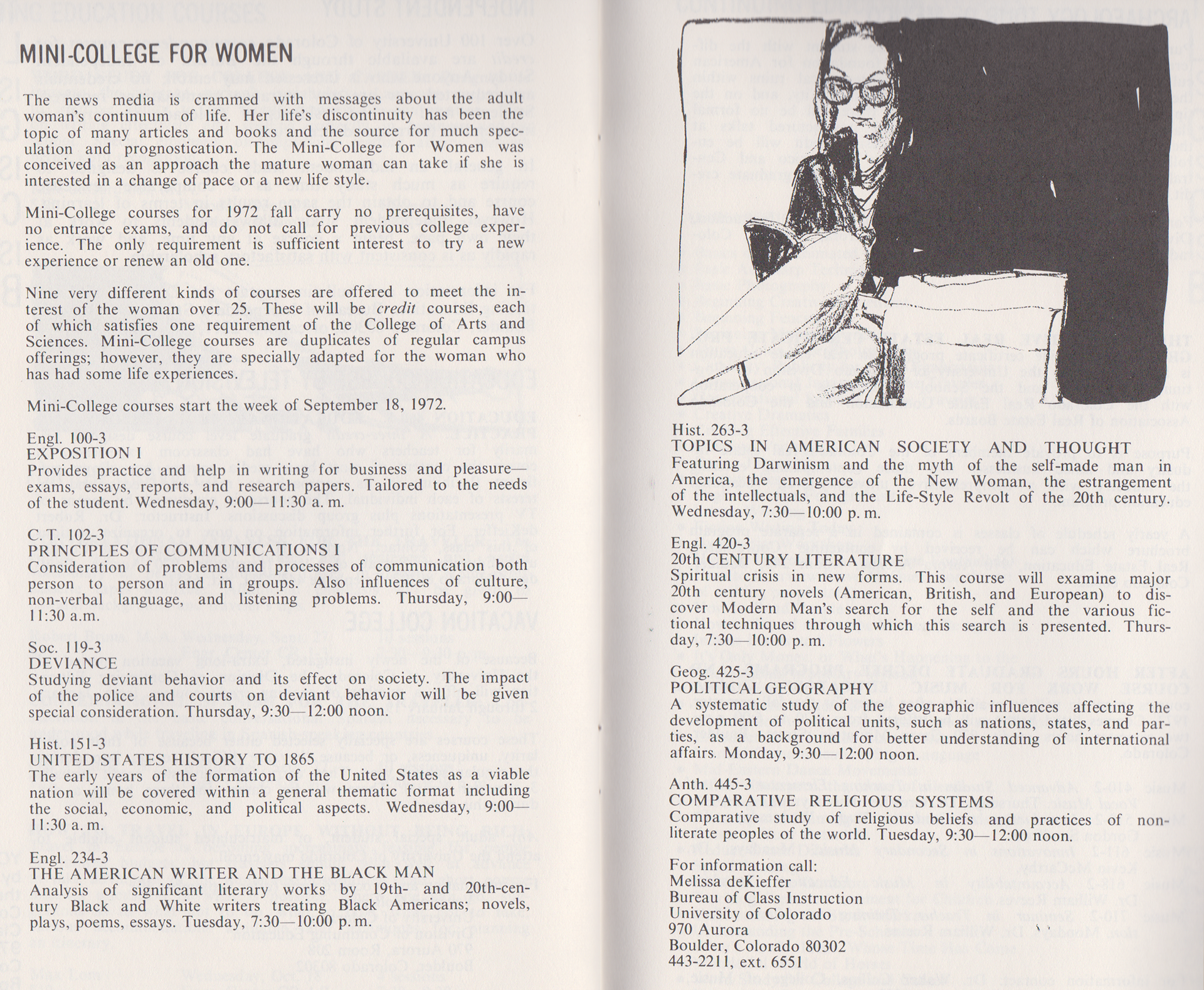
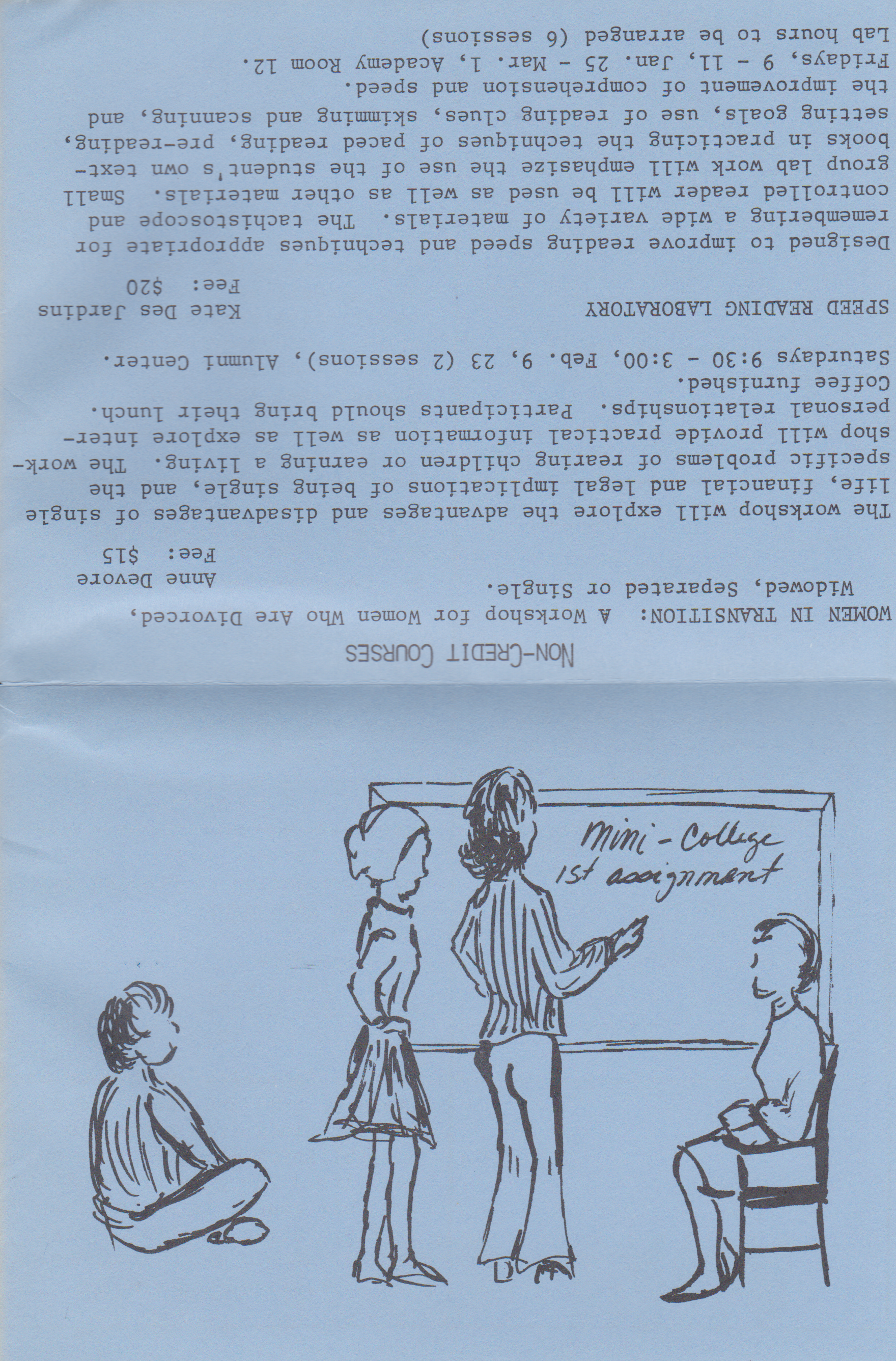
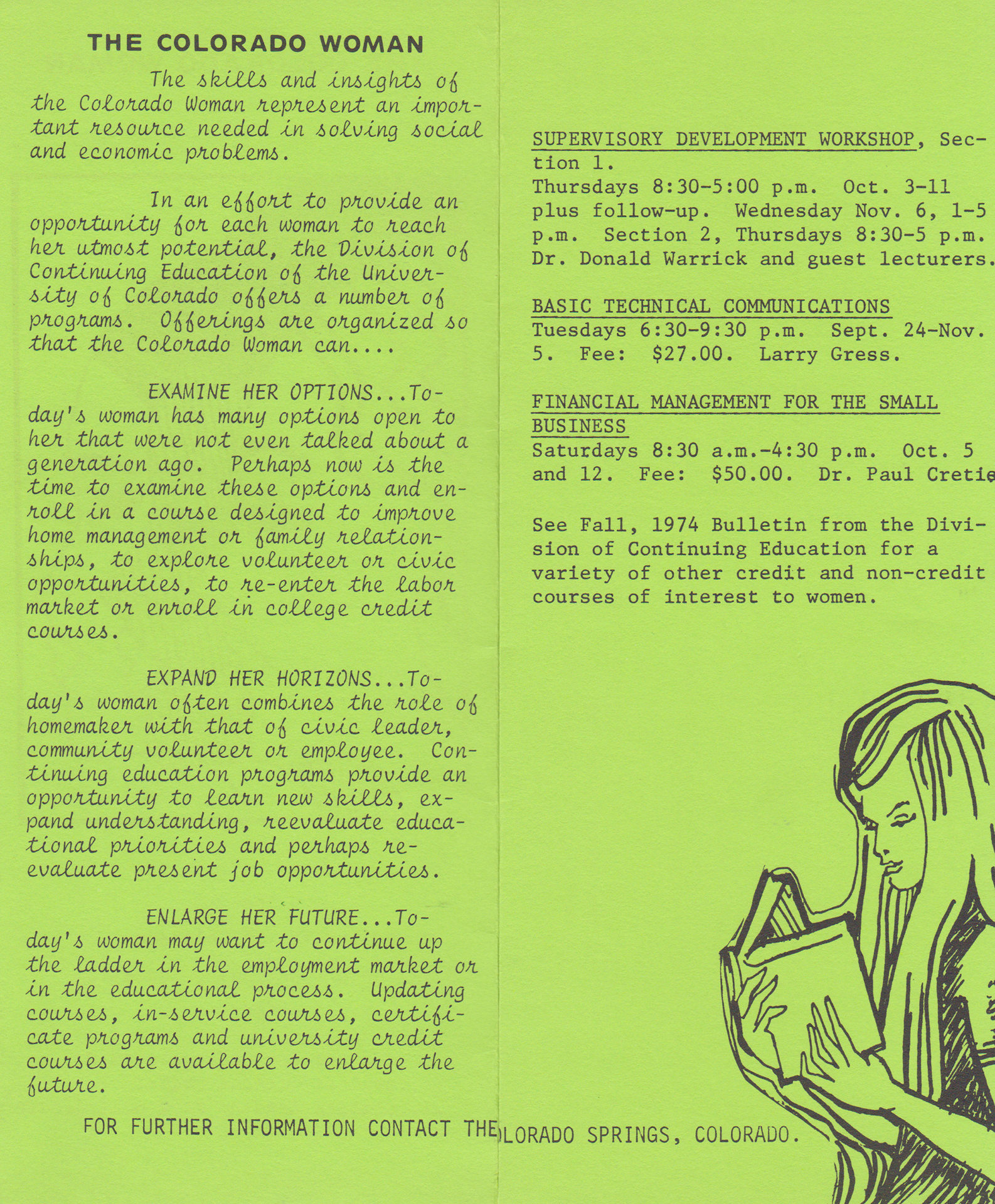
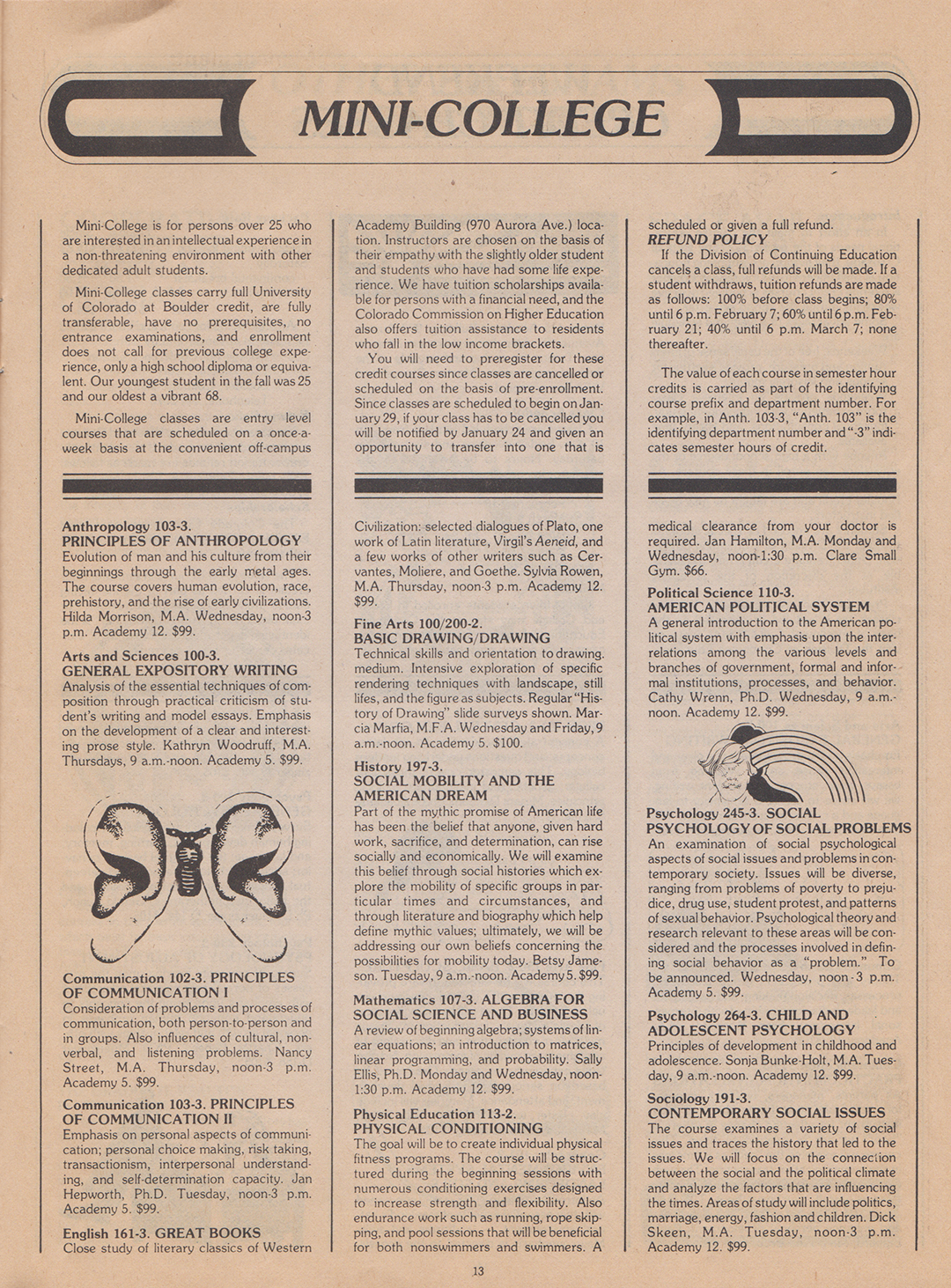
High-contrast halftone image of a seated student from a 1972 Continuing Education course catalog.
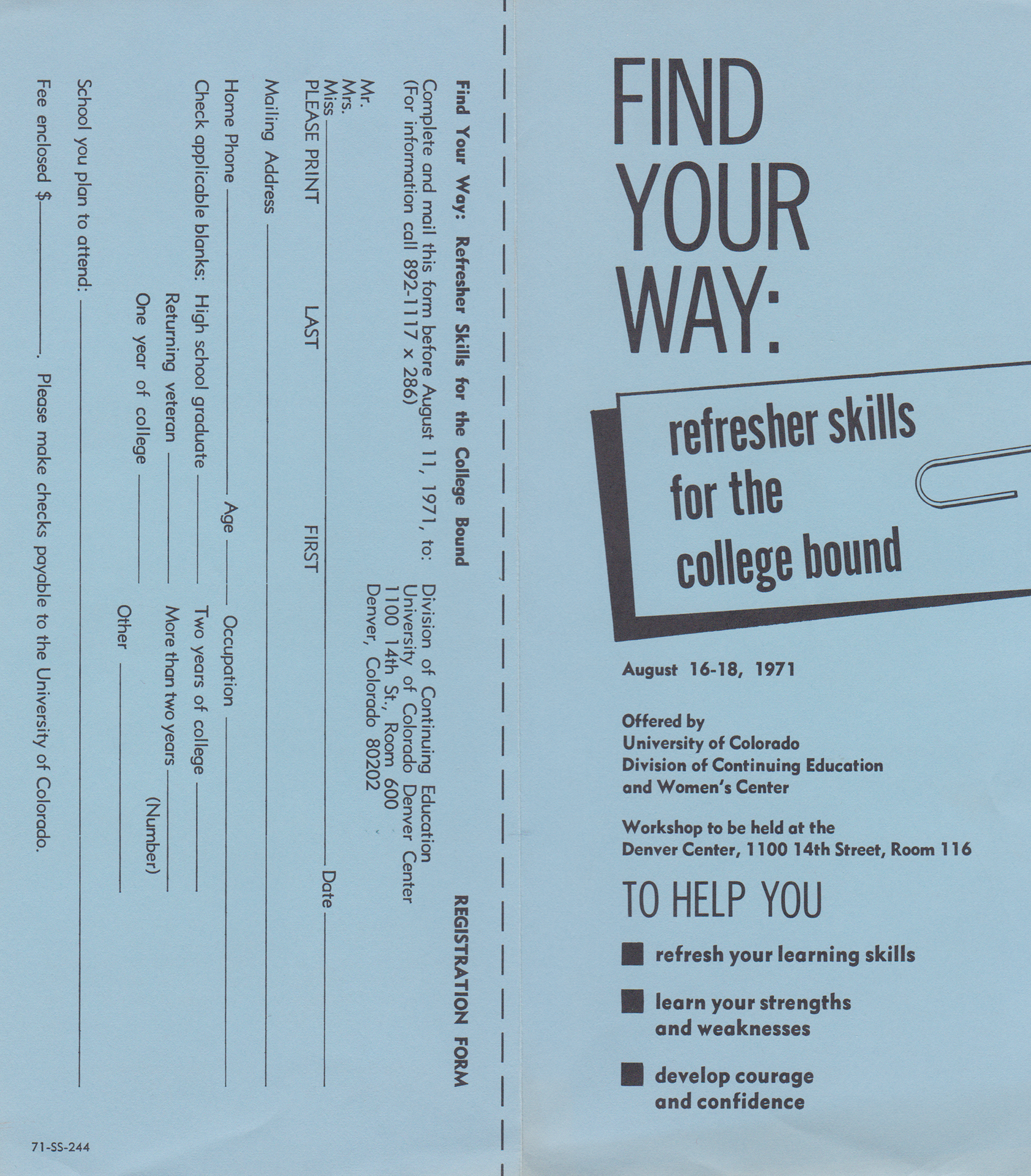
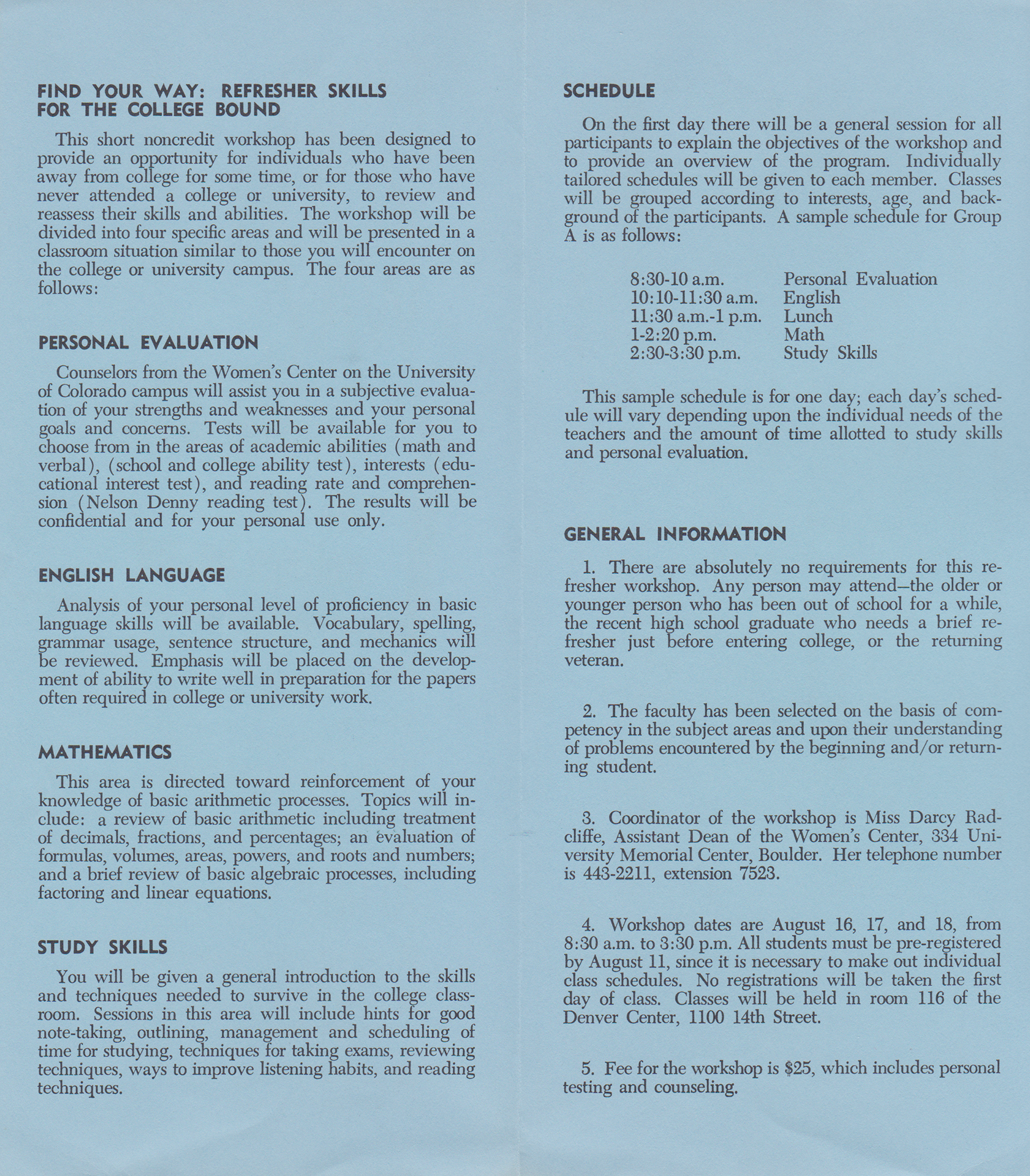
In 1964, recognizing the changing role and needs of women on campus, Dean “Polly” Parish worked with Continuing Education to establish the Women’s Center with an aim to give personal, vocational and educational counseling to women.
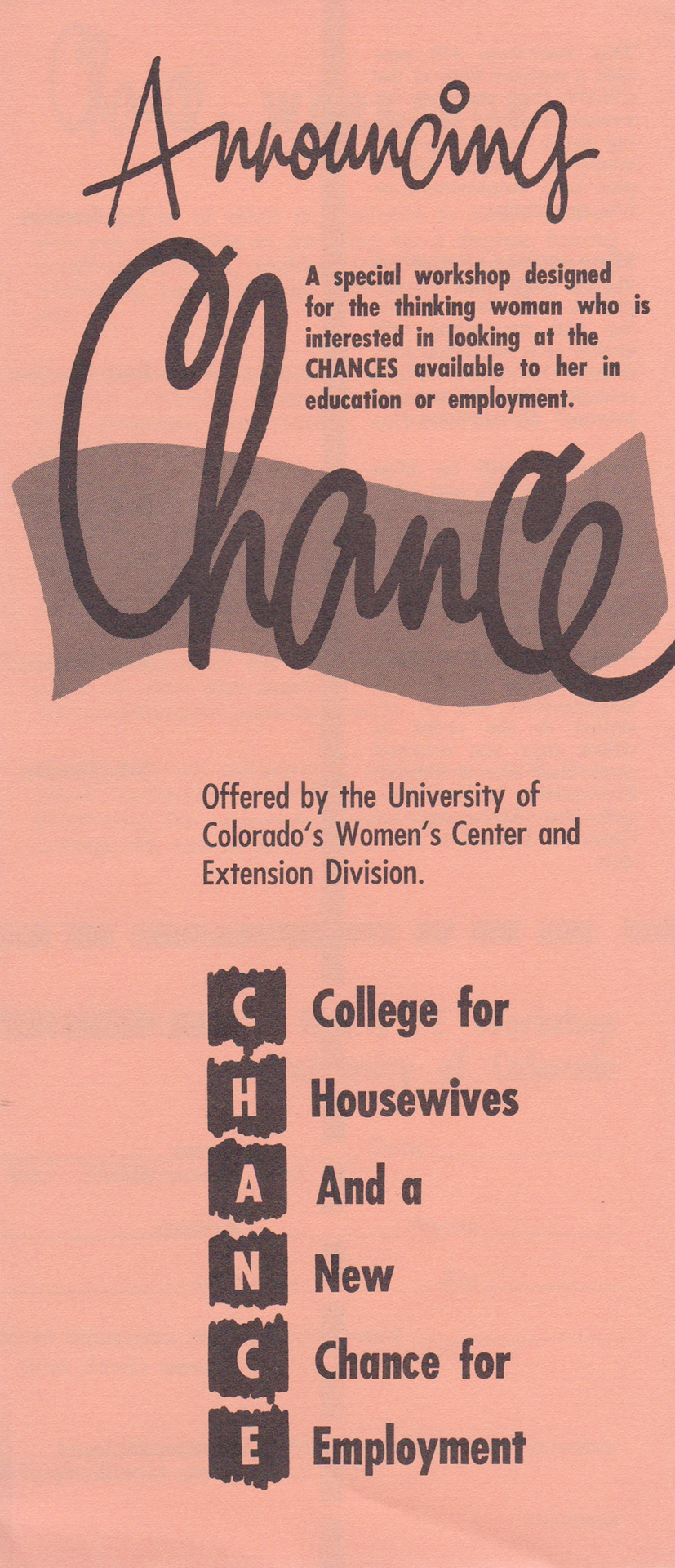
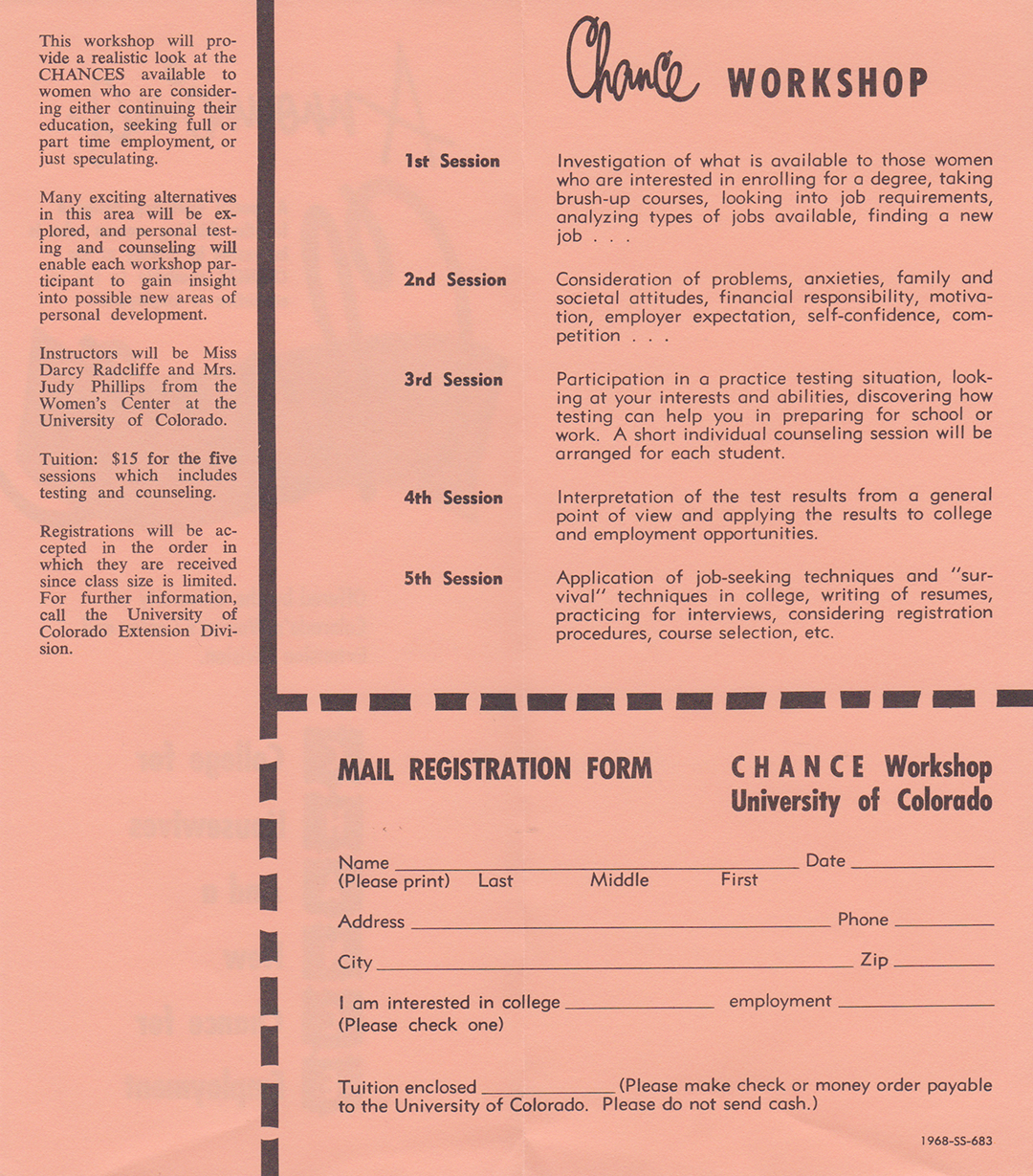
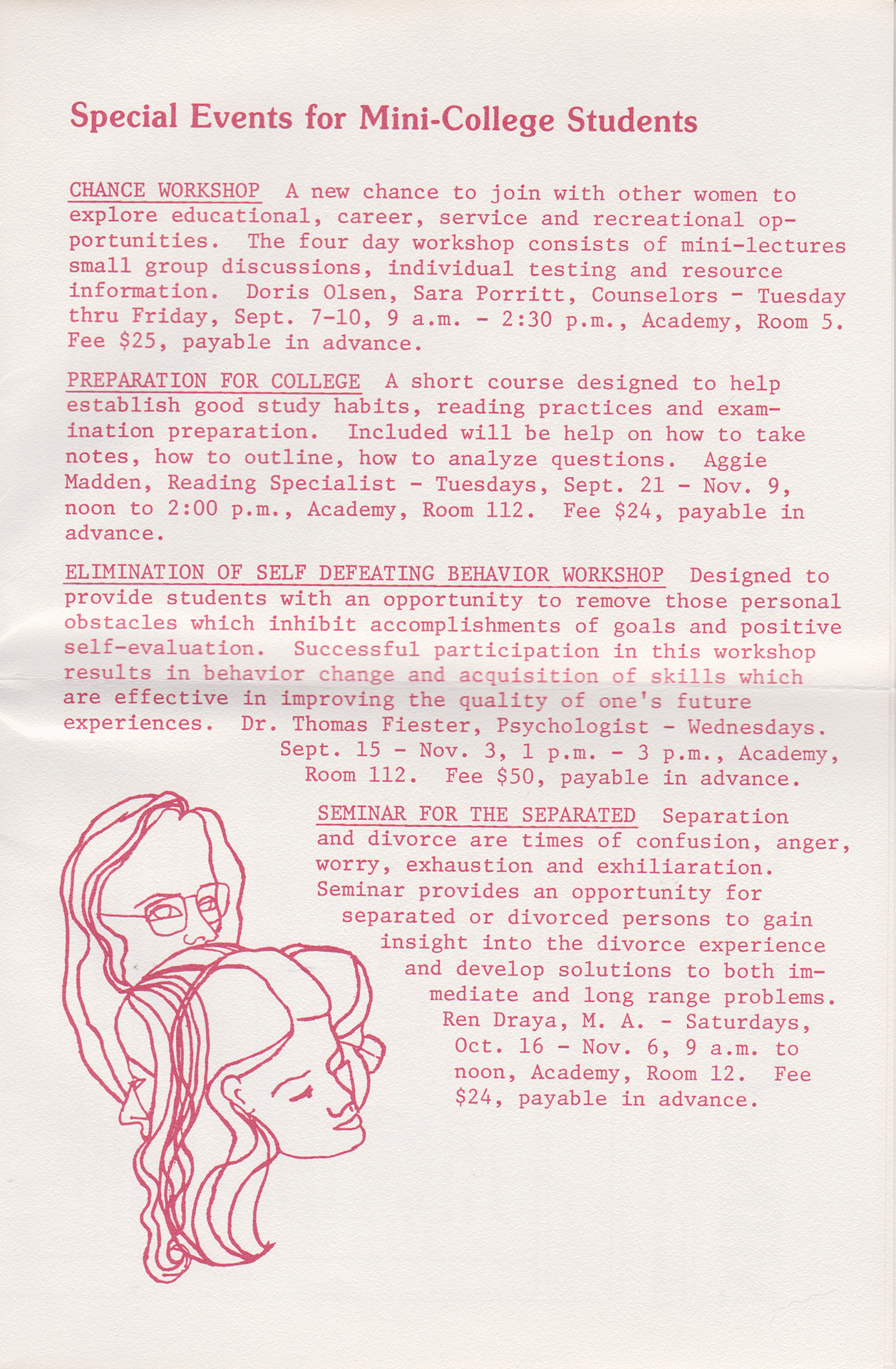
Building on the Women’s Center’s services, Continuing Education expanded its efforts in 1968 with CHANCE (college for housewives and a new chance for employment), a workshop that presented women with support and options for continuing their education or entering the workforce.
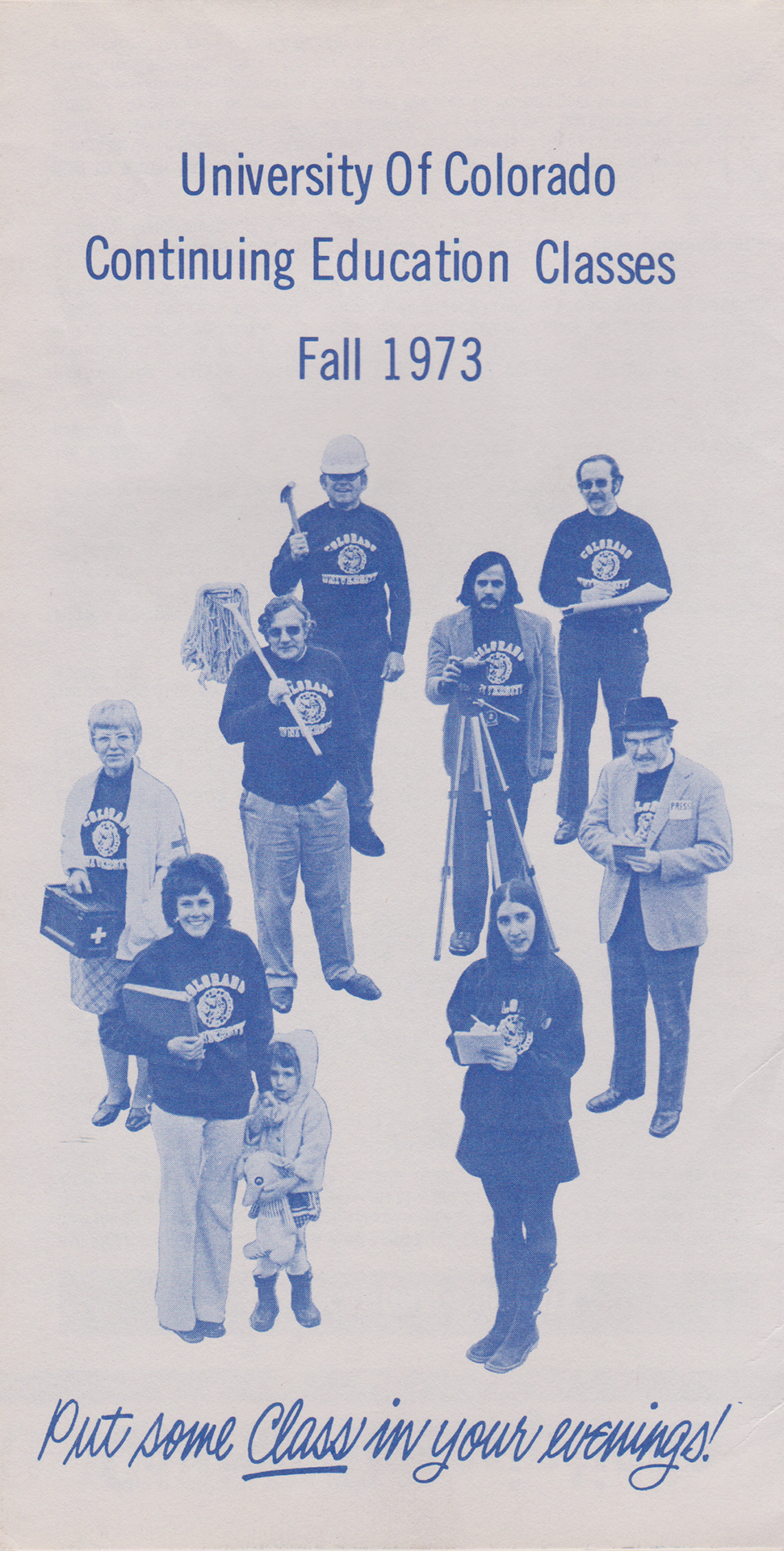
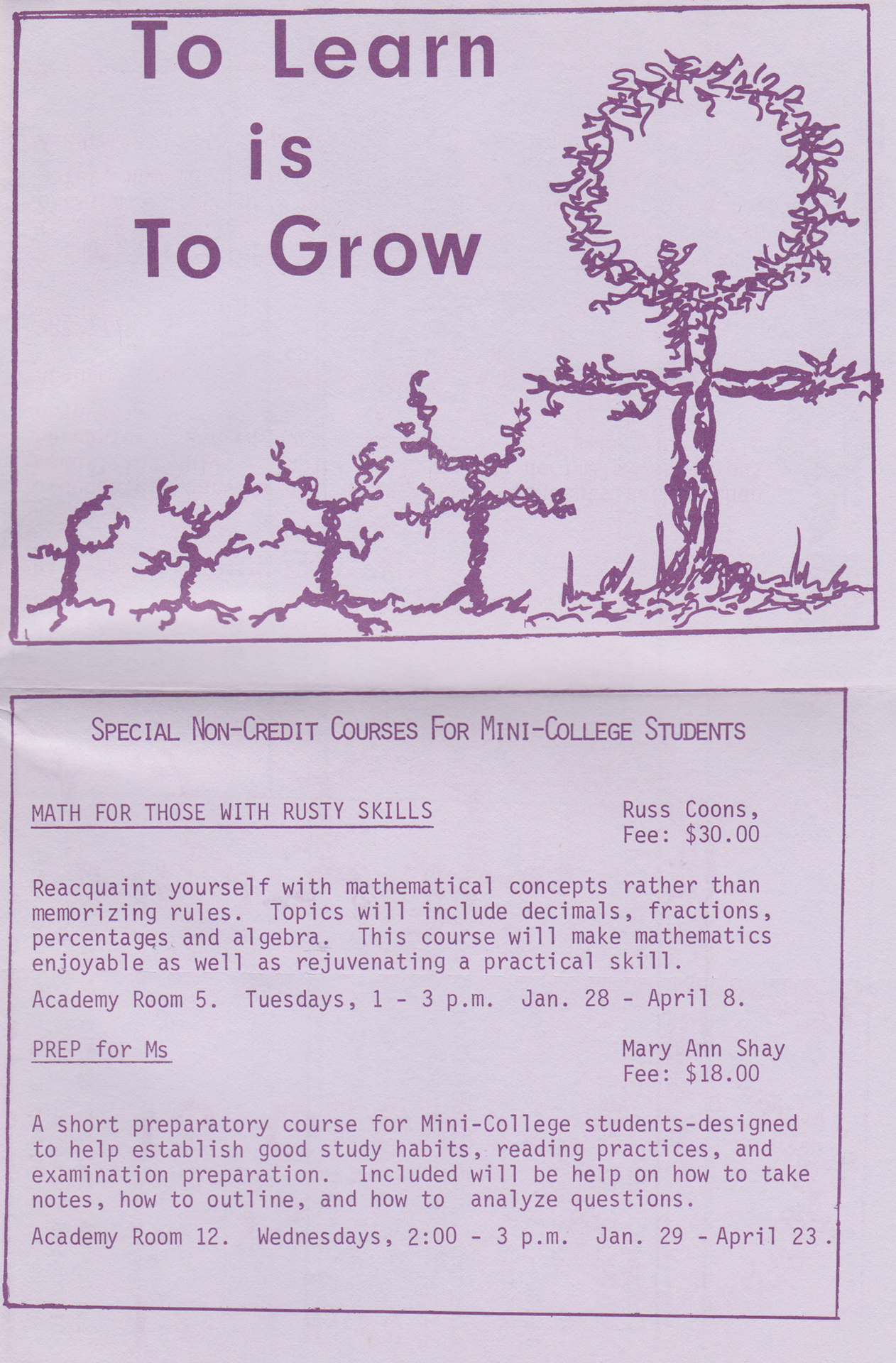
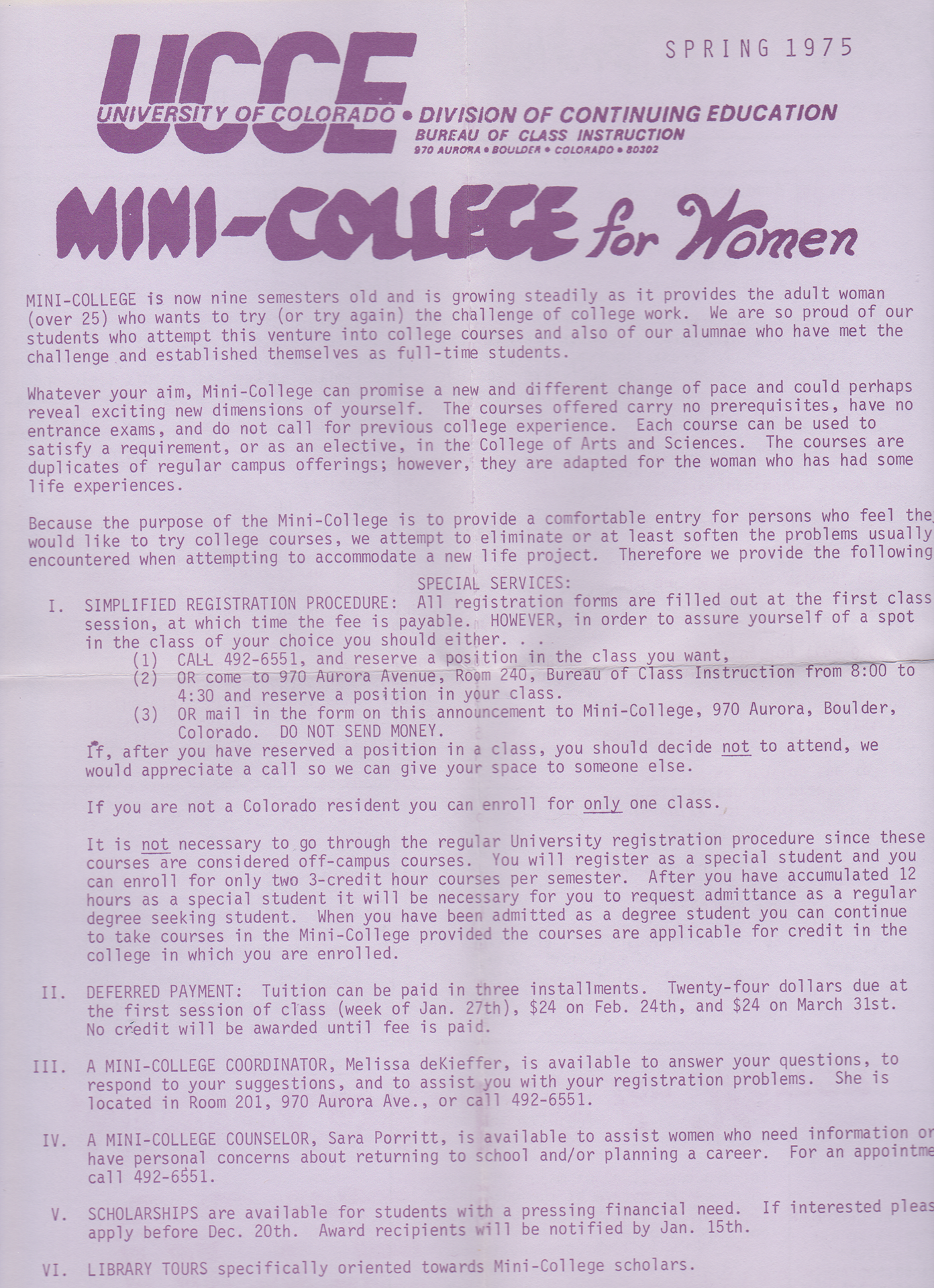
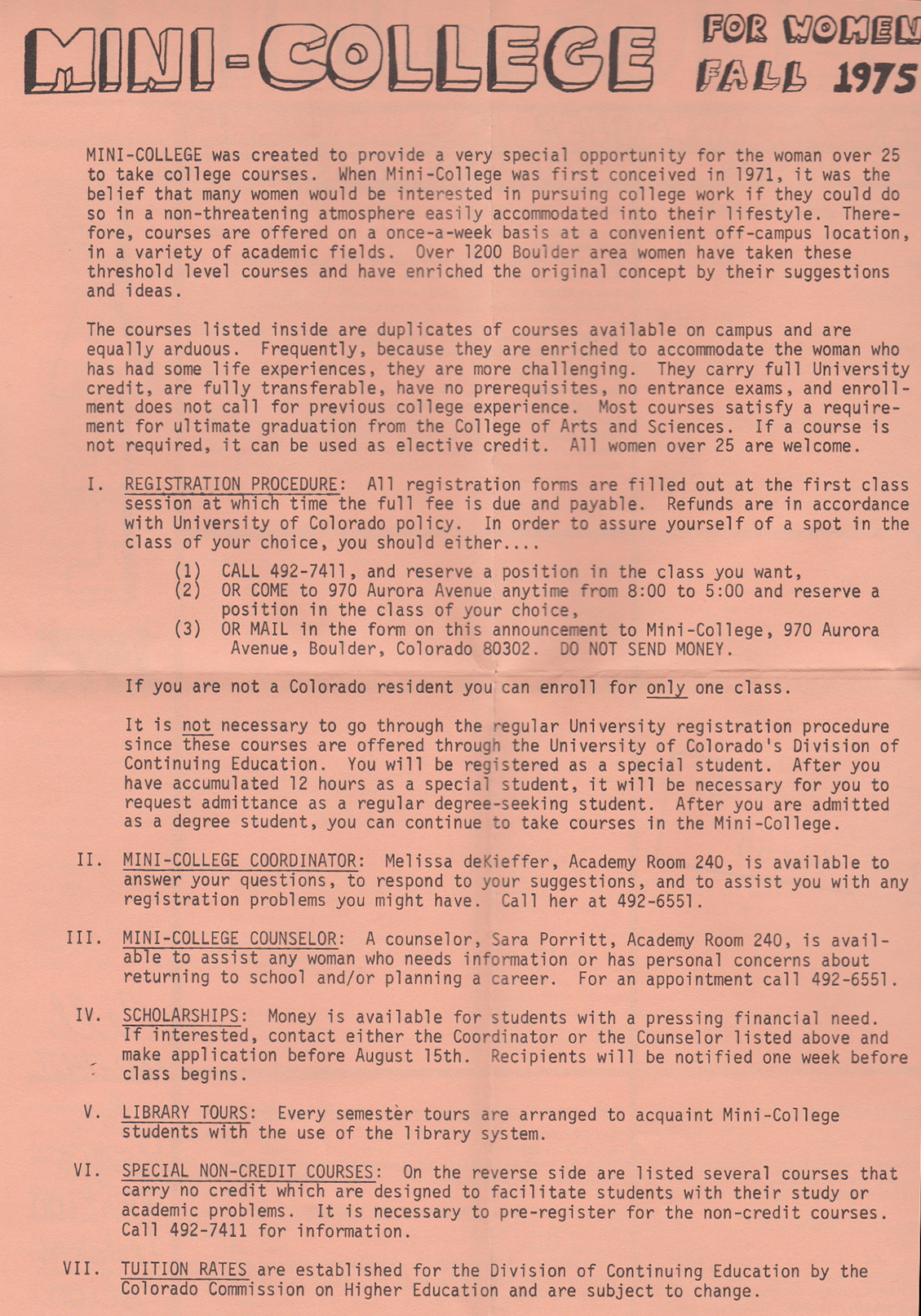
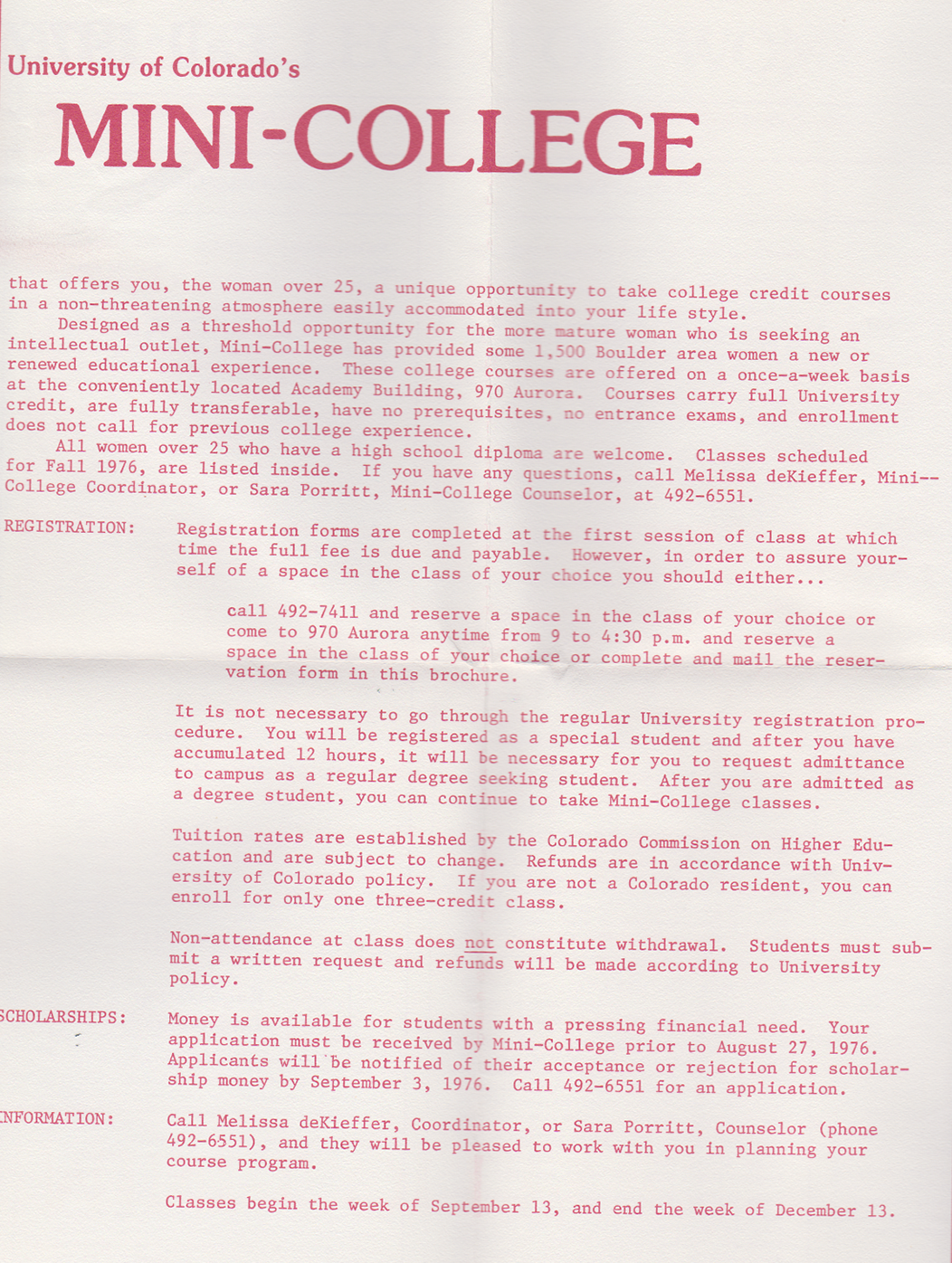
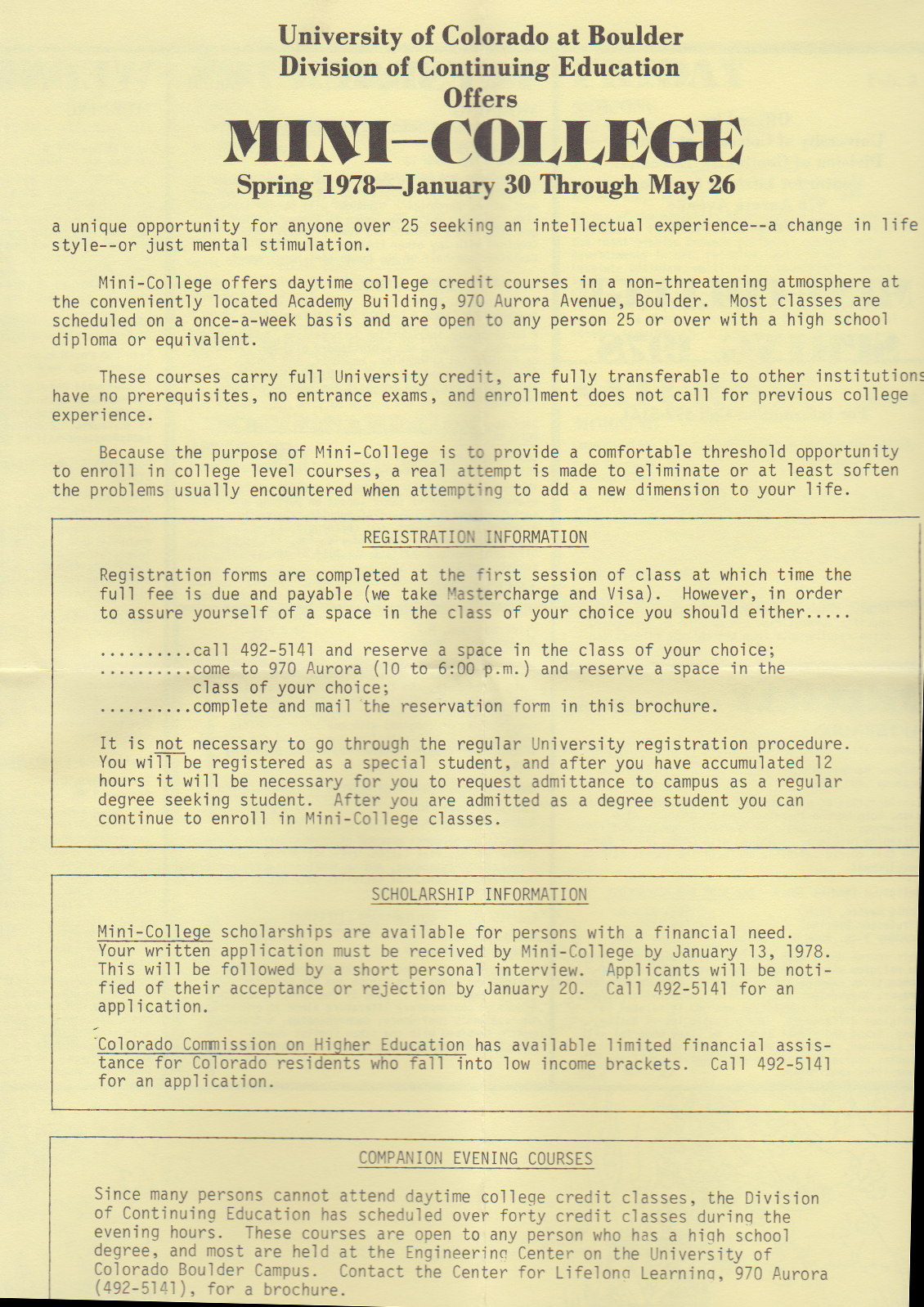
This early program would provide a blueprint for the 1971 establishment of the Mini-College for Women, introduced by Continuing Education, to give women over the age of 25 opportunities to learn something new or help prepare them for post-secondary education.
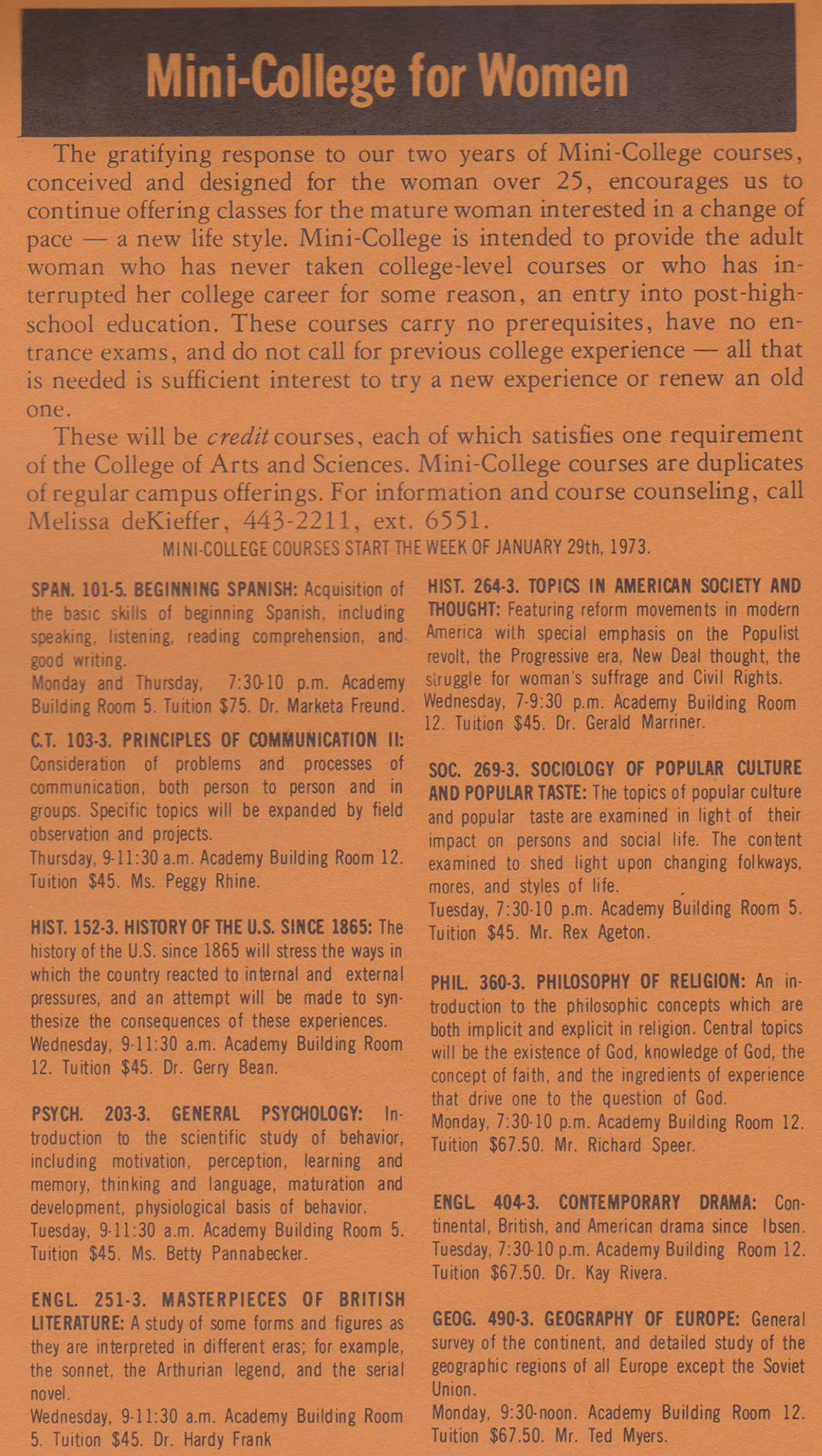
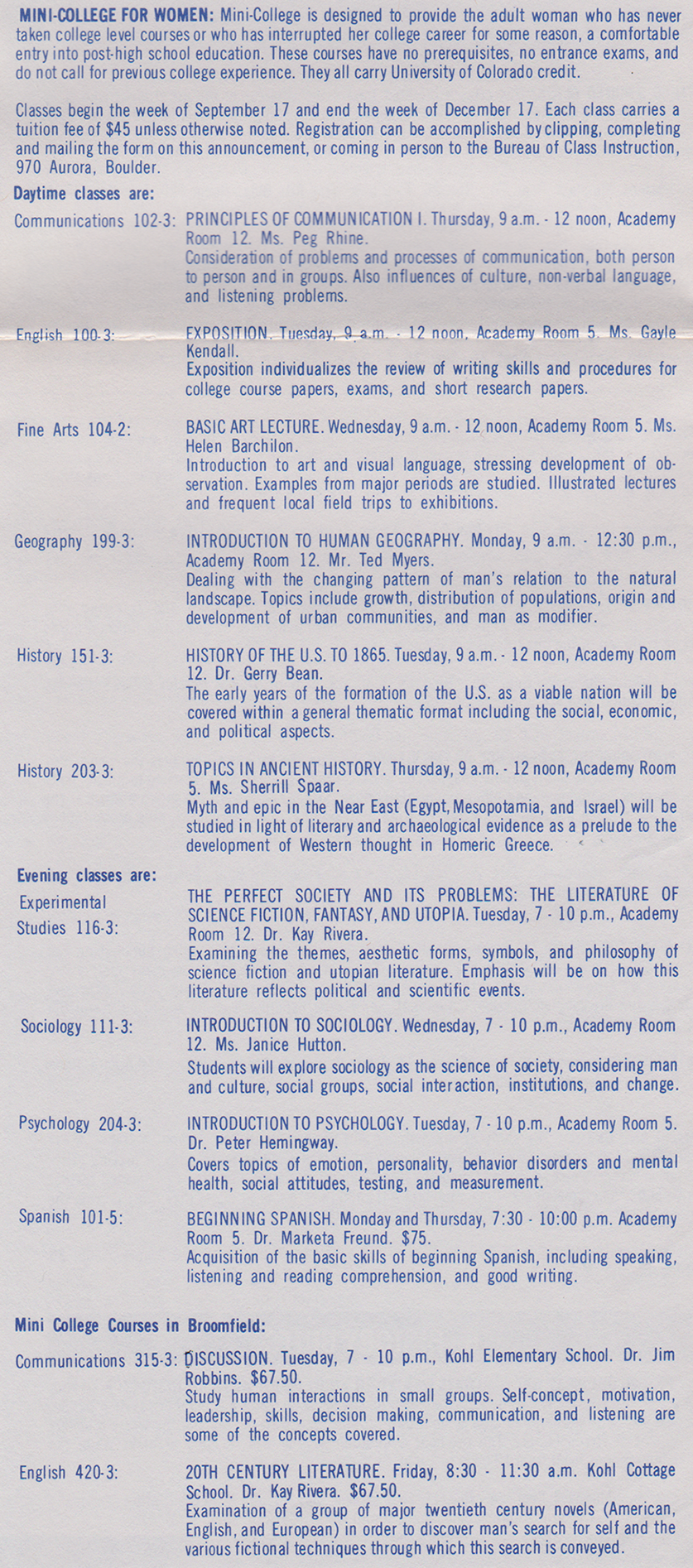
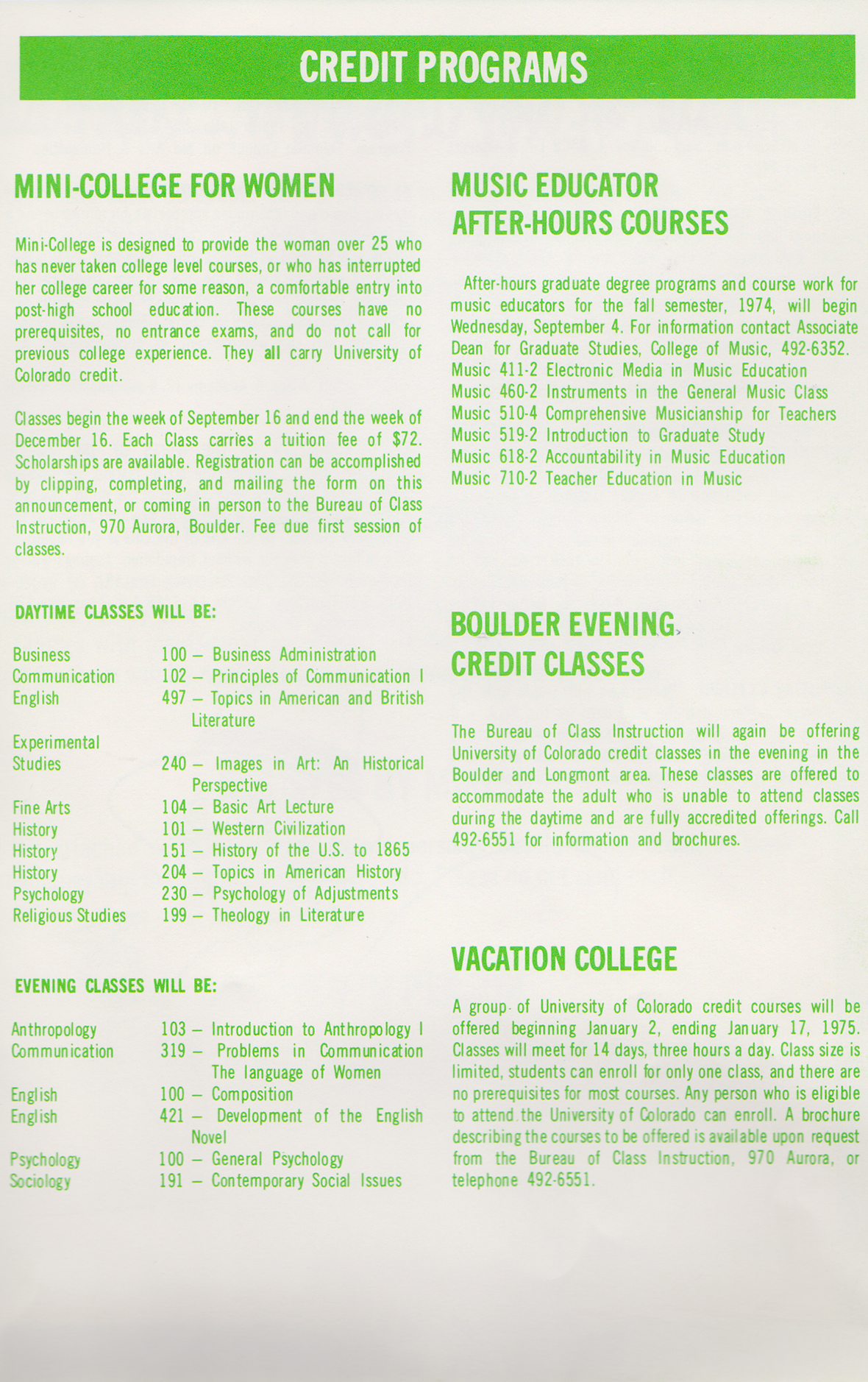
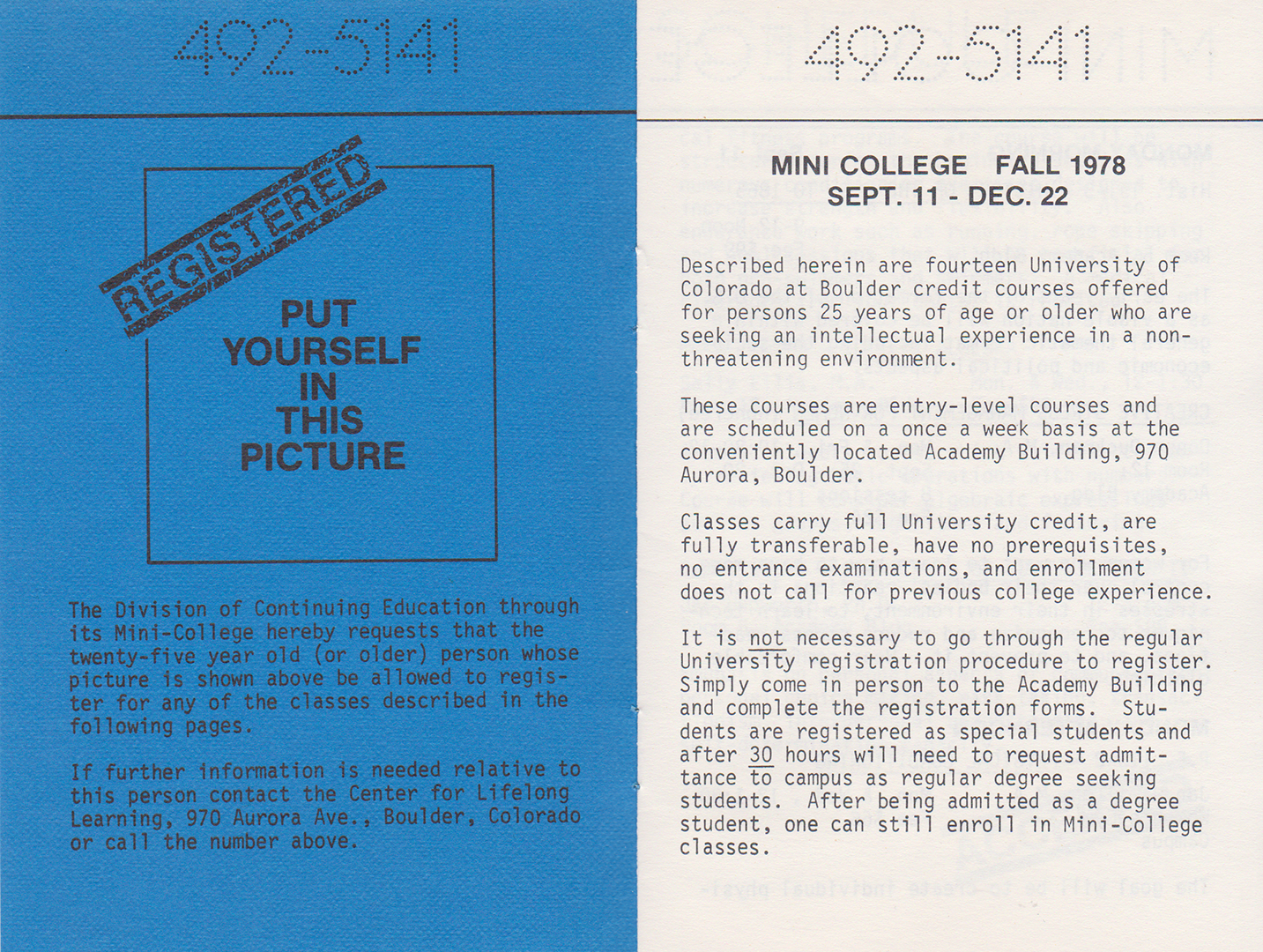
With no entrance exams or prerequisites, the program provided low-barrier entry into the university system. Women could earn college credit through courses that mirrored main campus courses but went further to acknowledge and accommodate their life experience.
Courses were offered once a week, making commitment to the program more tenable for busy women. The courses within the mini-college were varied and included several traditional subjects such as geography, history and literature, but also featured timely offerings like “Sociology of Popular Culture and Popular Taste,” “Topics in American Society and Thought,” and “The American Political System.”
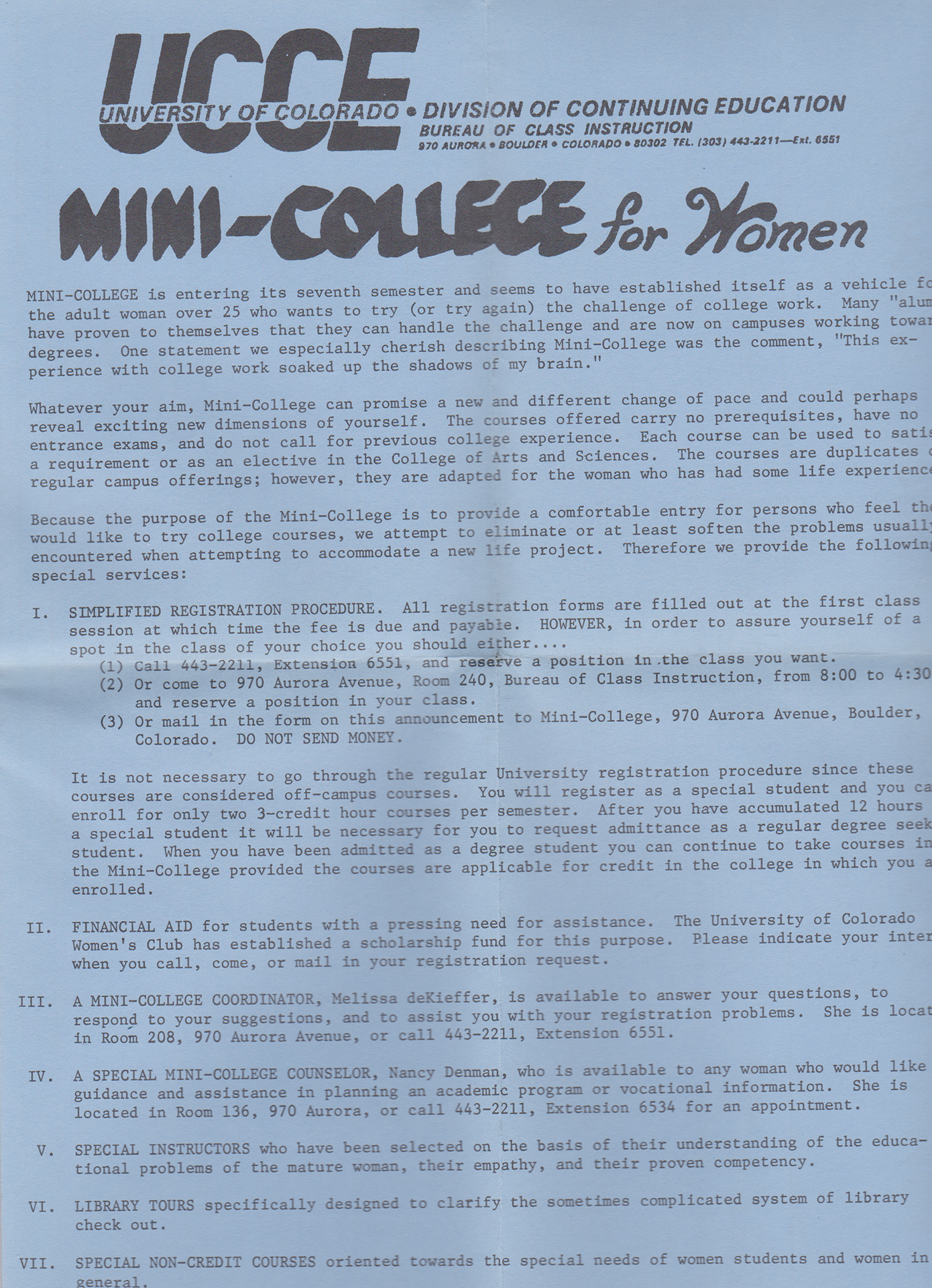
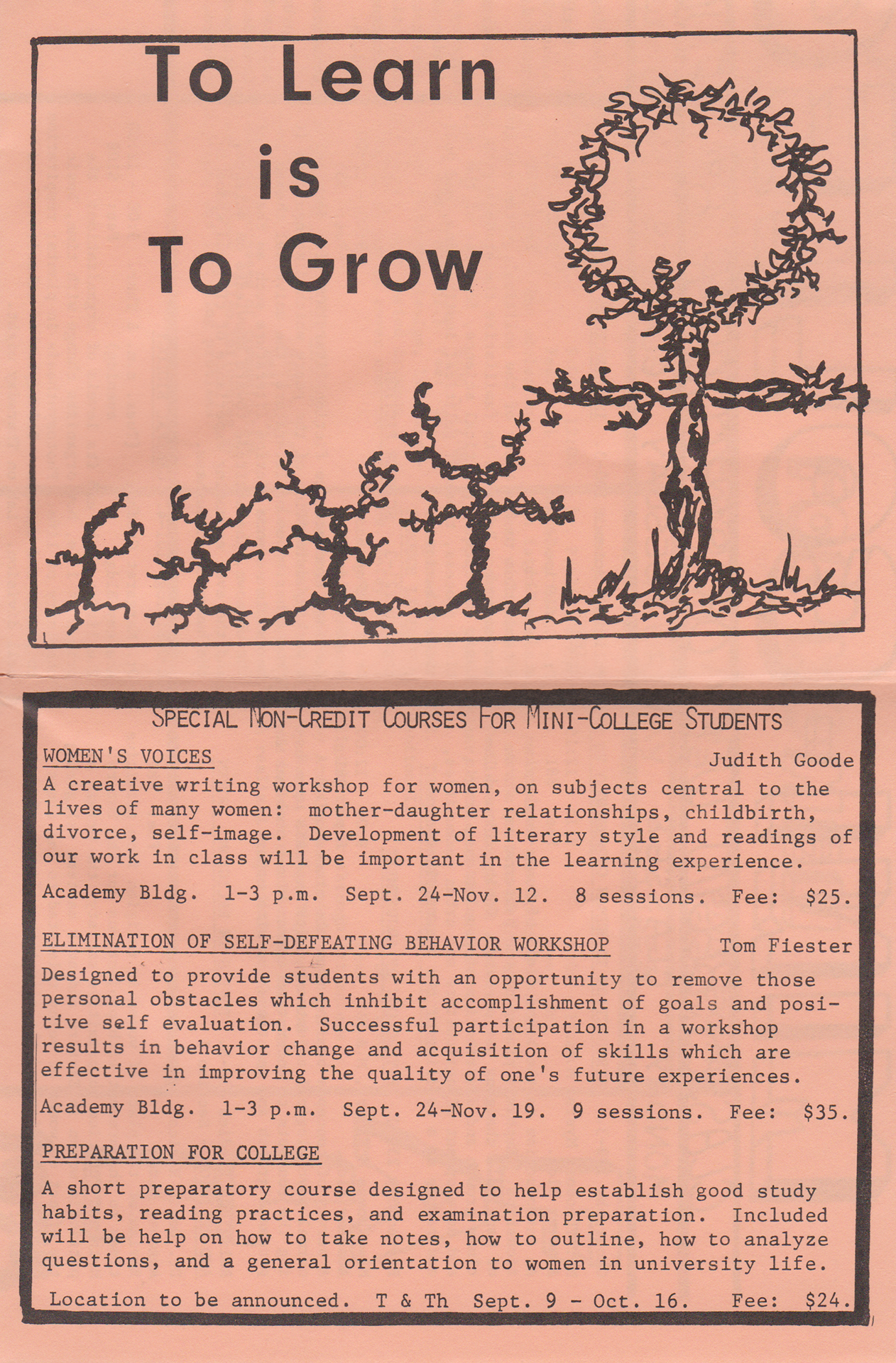
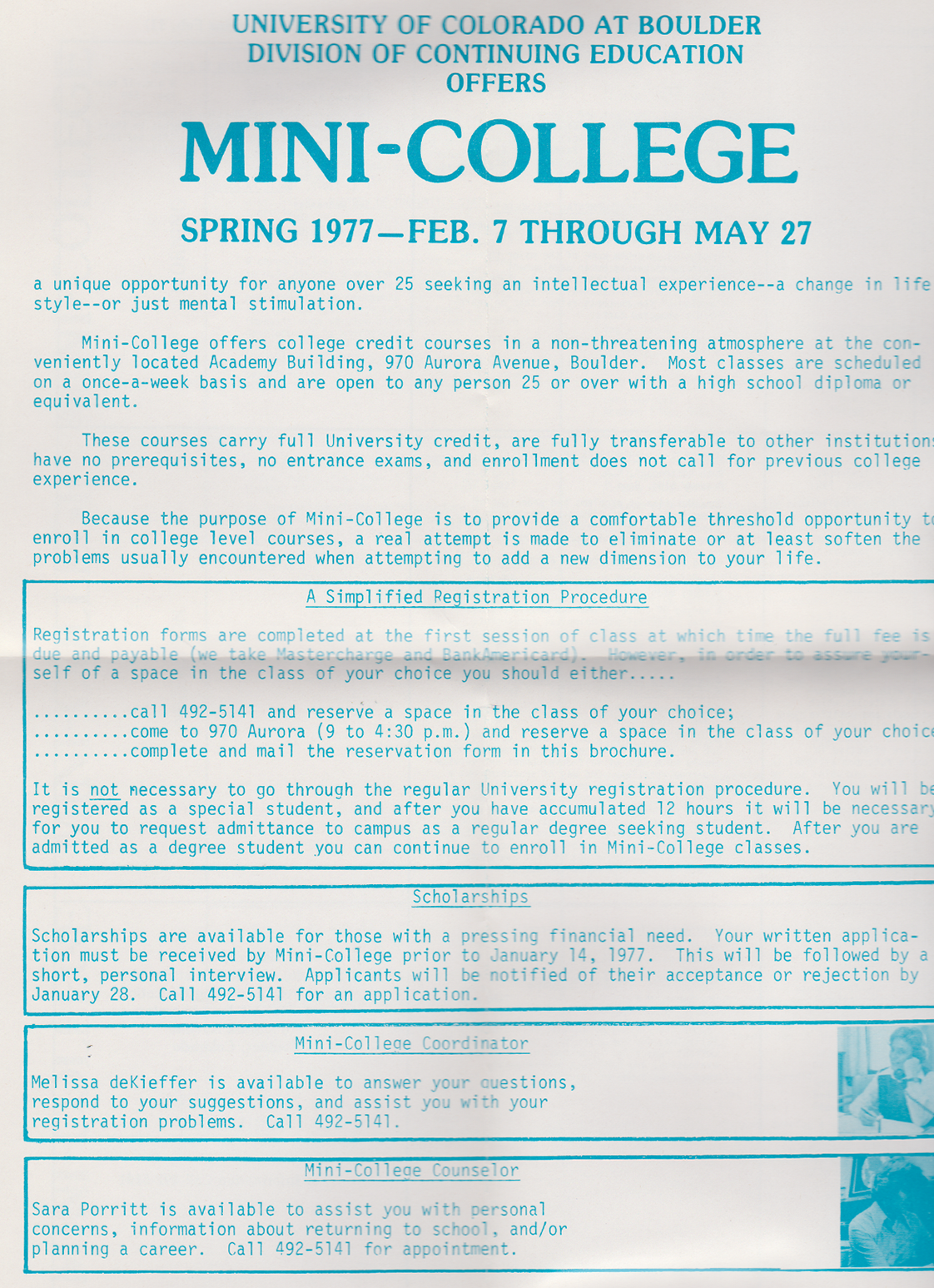
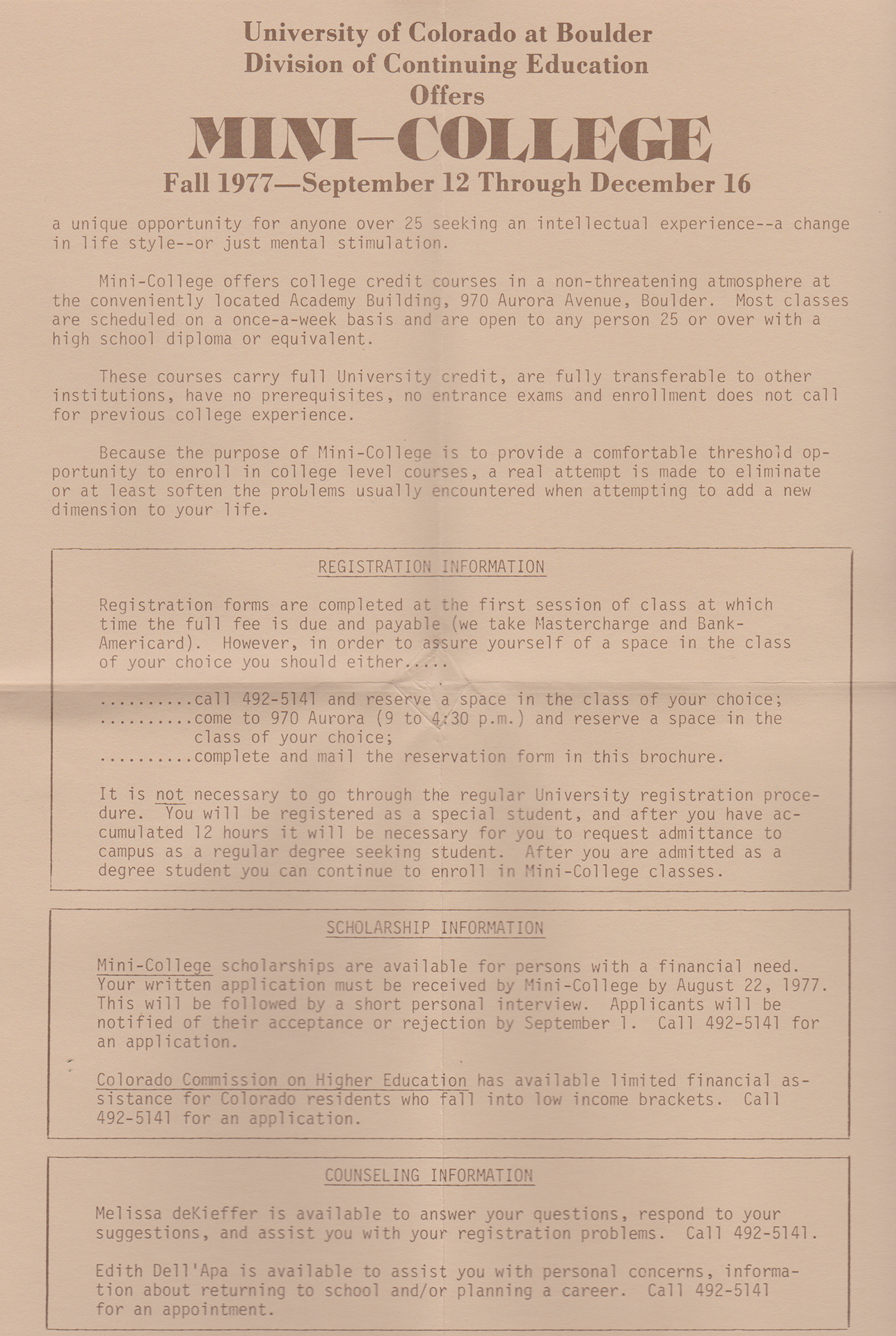
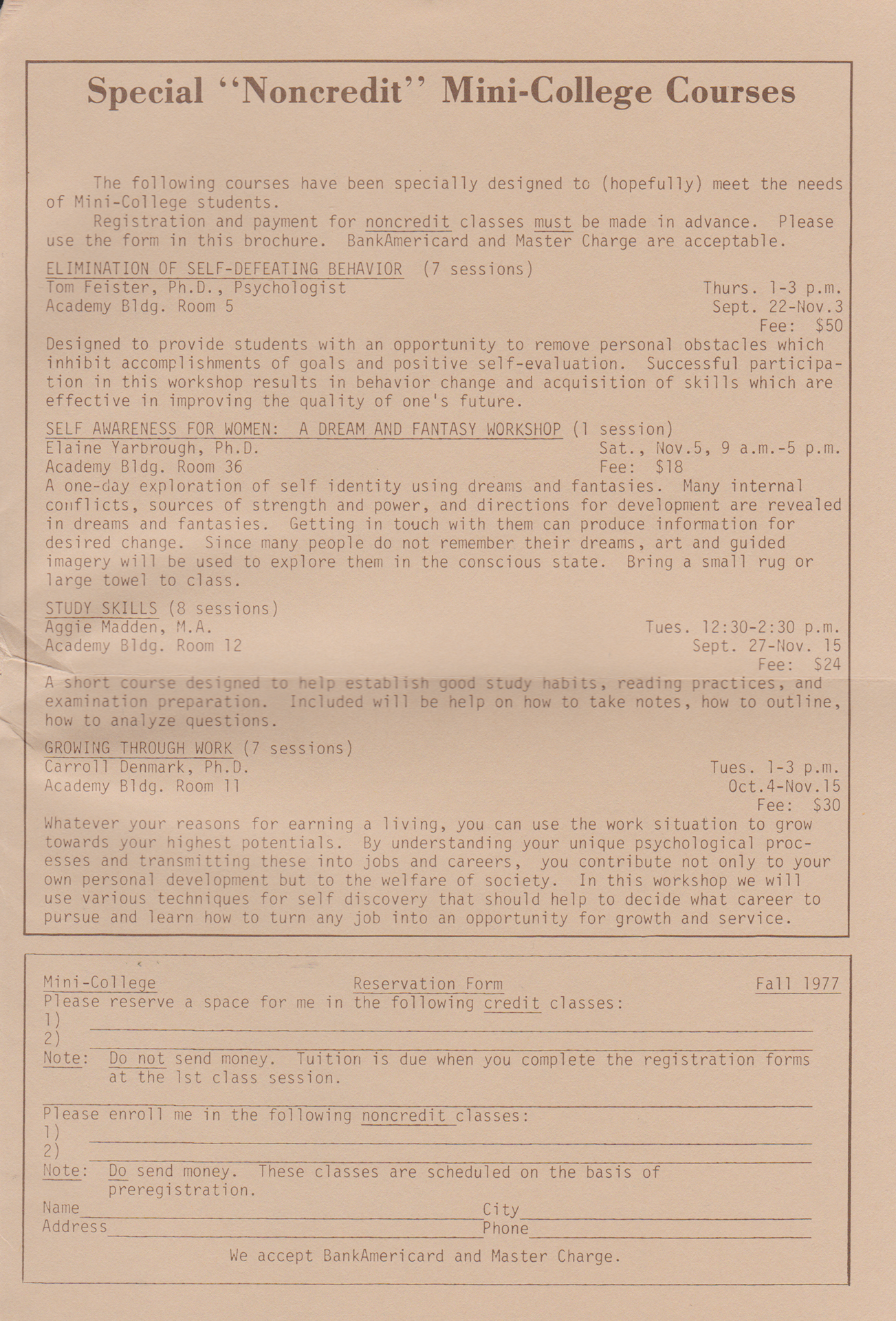
In addition to a low-commitment class schedule, students were also given a bevy of support services, including scholarship opportunities, a dedicated coordinator and counselor, library tours, non-credit course options and a simplified registration procedure wherein students simply had to show up to the first class and pay their registration fee.

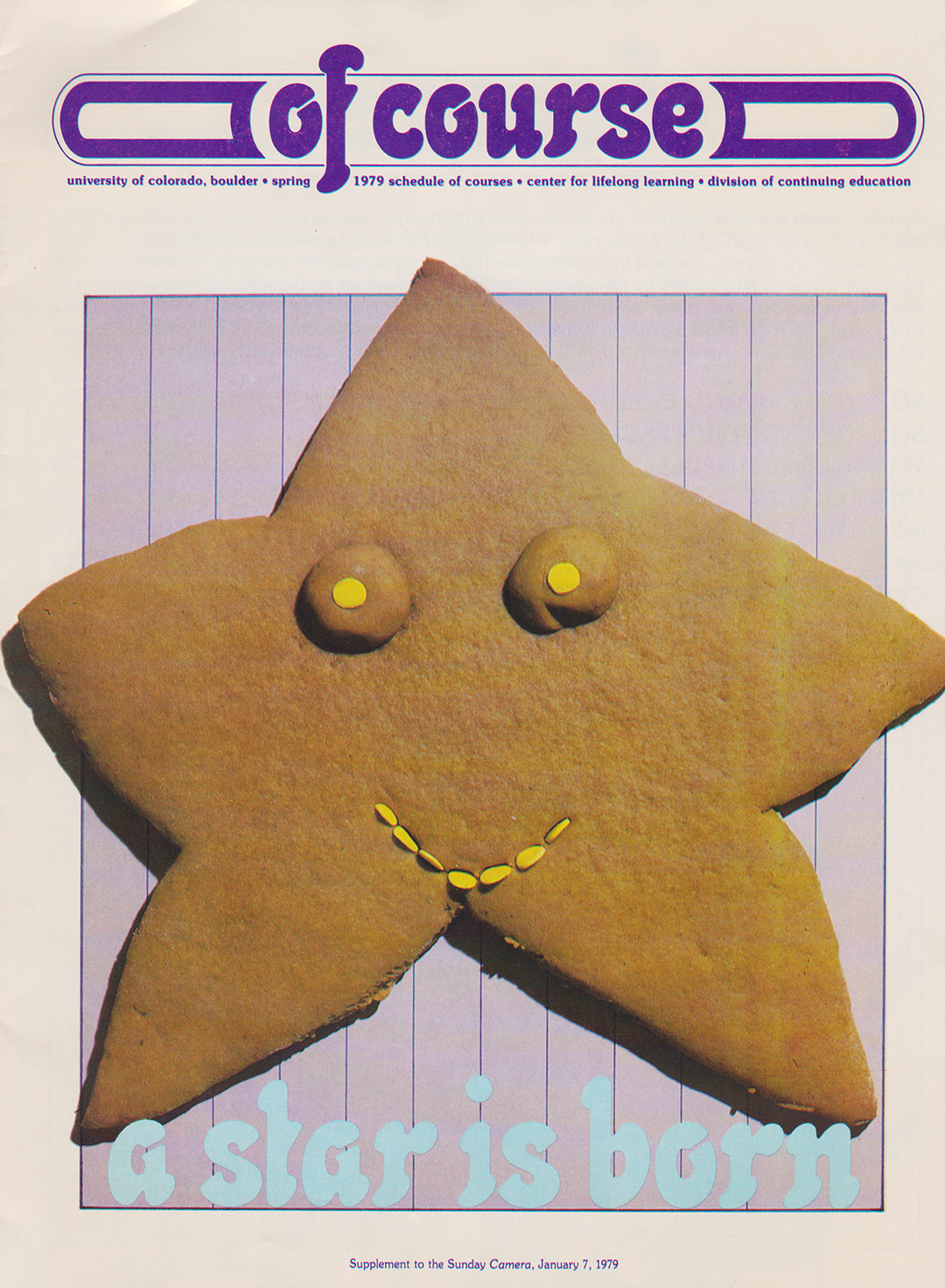
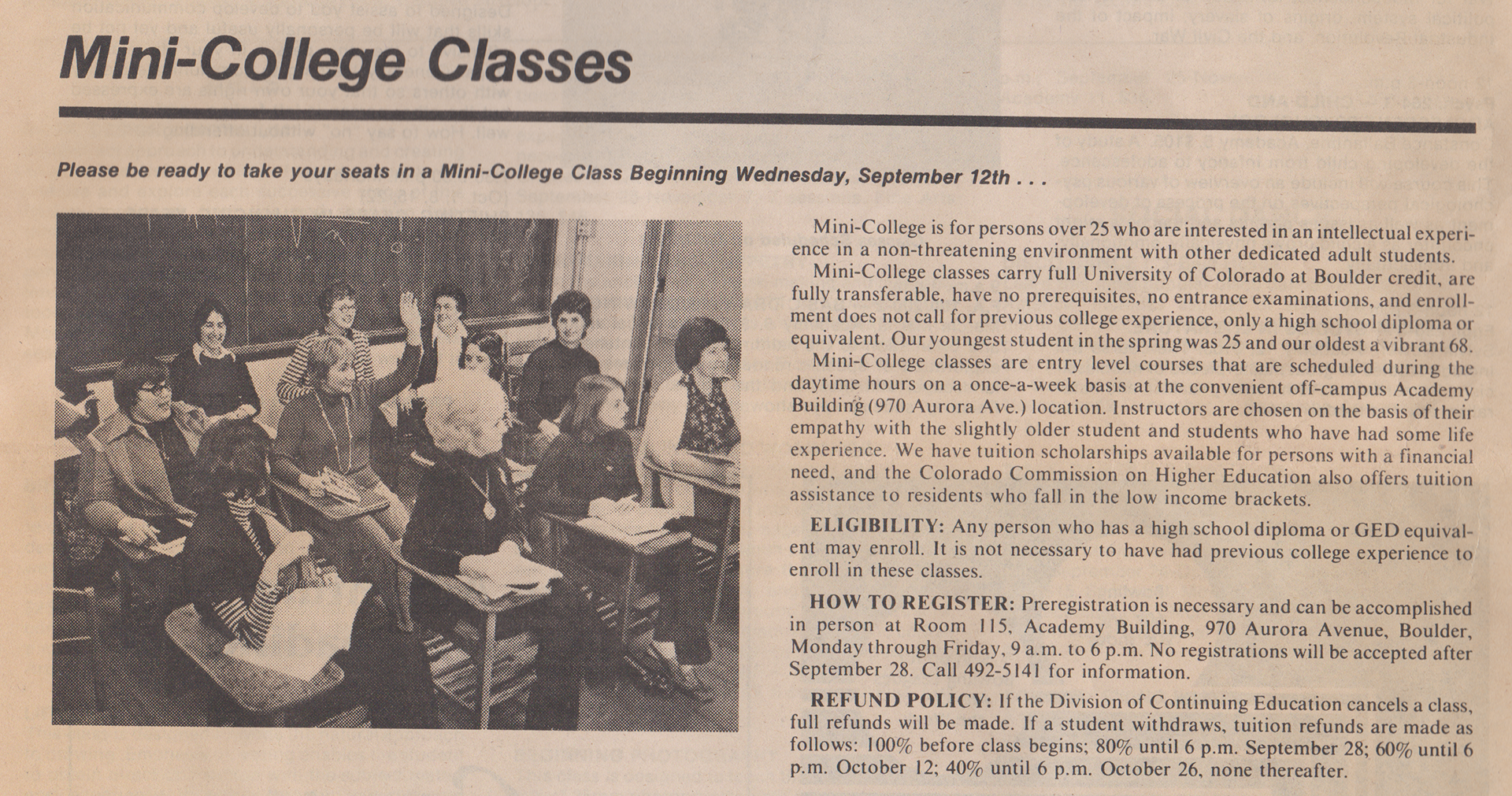
Students seated in a classroom from a 1979 supplement to the Daily Camera.
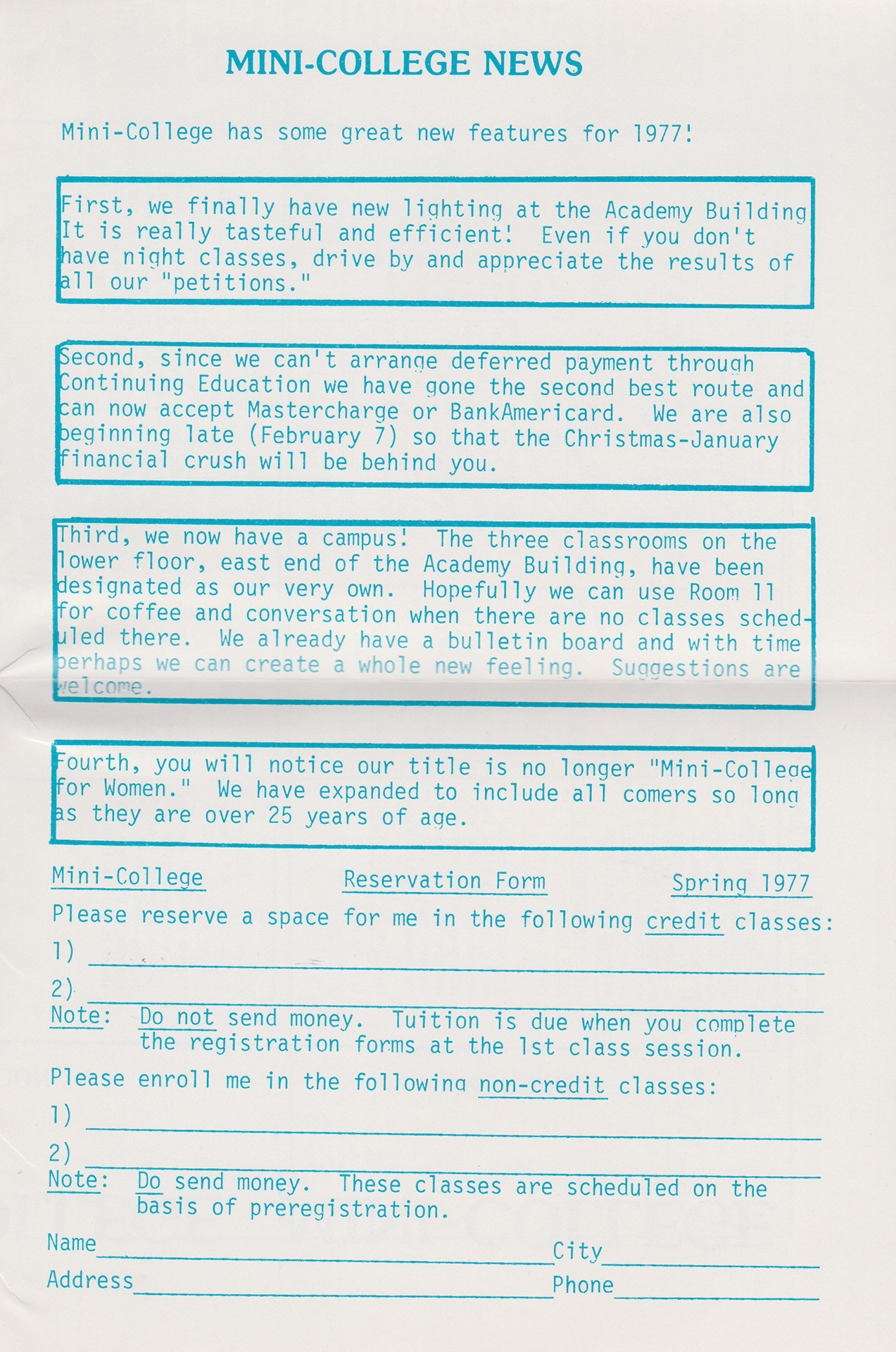
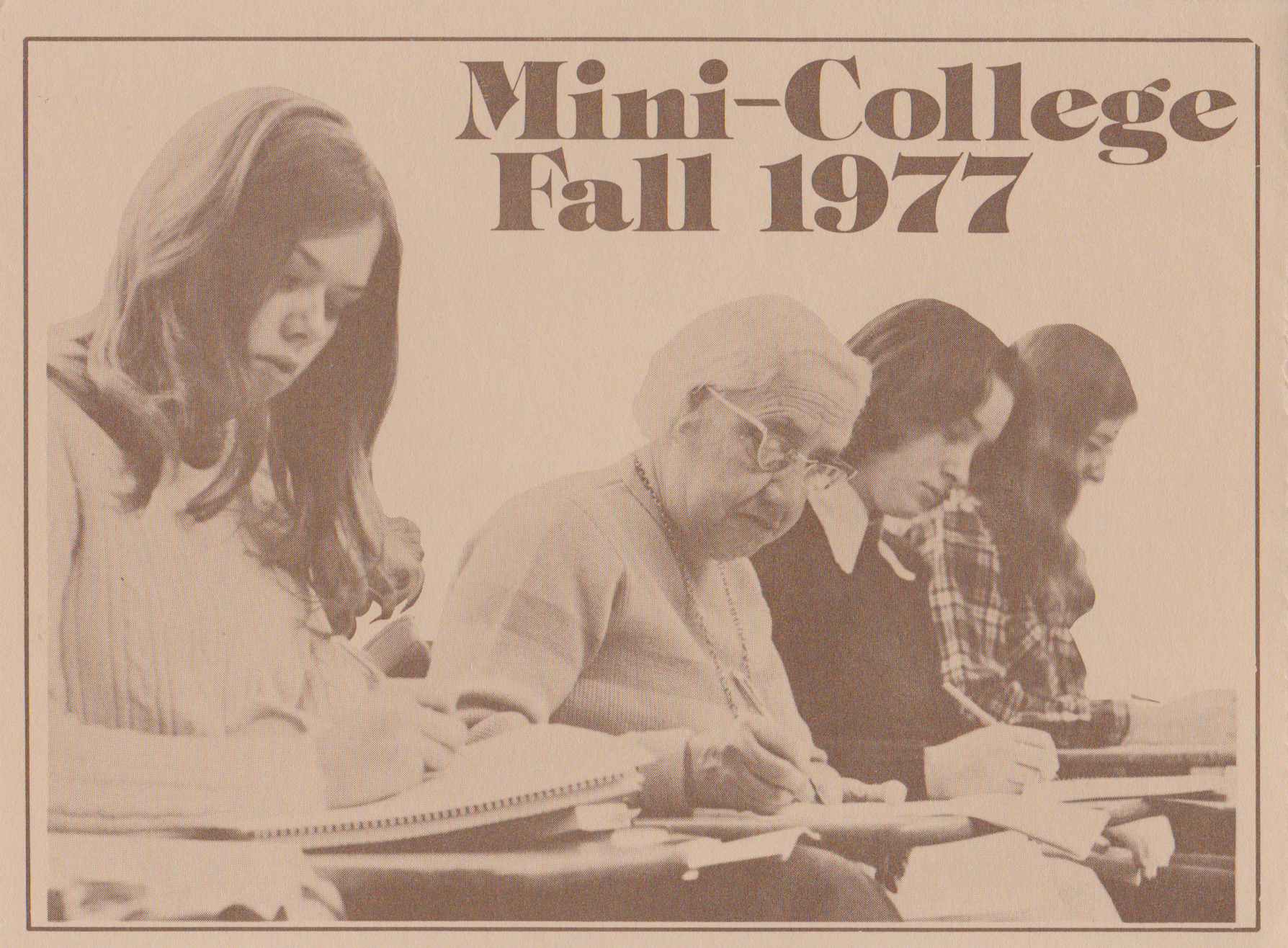
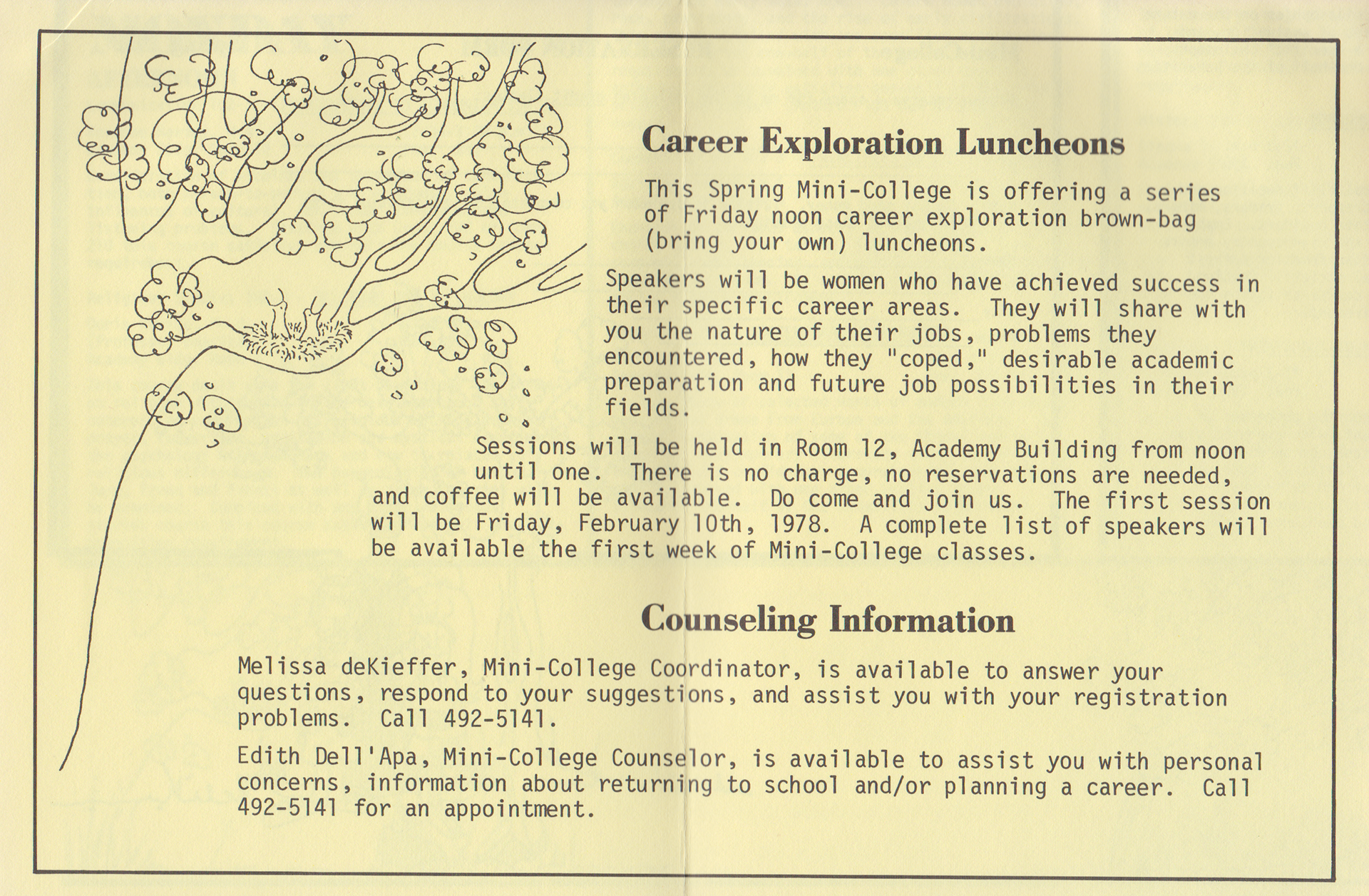
In 1977, after providing 1,500 women with a chance to explore their potential, the Mini-College for Women rebranded, becoming Mini-College in an effort to accommodate and welcome more students in need of a low-barrier to entry program. Despite the name change, the Mini-College still emphasized opportunities for women through offerings like career exploration luncheons where students could hear from women who had achieved career success and courses such as “Creative Stress Management for Women.”
However, as Continuing Education moved into the 1980s, more emphasis was placed on Evening Credit courses that offered many of the same benefits of Mini-College courses and appealed to a broader audience.
Thus, in the spring of 1981 and after ten years in operation, the Mini-College was officially phased out.
While it has been 45 years since the program concluded, the influence of the Mini-College has endured. It is one of the many programs that has helped shape Continuing Education's ongoing mission of providing lifelong learning opportunities by extending the educational resources of the University of Colorado Boulder to learners at every stage of life.